
Previous
Next
Tyco Thermal Controls and Sensors: Selection and Industrial Applications Guide
1. Industrial Thermal Management and Sensing Architecture
Evolution of Industrial Trace Heating and Monitoring Systems
In modern industrial pipe networks and process media transportation, thermal control technology has evolved comprehensively from traditional resistance heating into intelligent, networked temperature control systems covering both hazardous and general environments.
As industrial automation deepens, traditional decentralized heating is gradually being replaced by precise temperature control, ensuring stable and controllable thermal energy supply under complex operating conditions.
Core Role of Tyco Thermal Controls
In the petrochemical, power energy, and heavy industry sectors, tyco thermal controls solutions play a critical role in preventing media freezing, maintaining key process viscosity, and ensuring long-term safe operation.
Through scientific trace heating architecture design, the system effectively overcomes heat loss caused by harsh environments, safeguarding the continuity of core production processes.
Introducing Tyco Sensors to Achieve Process Precision
Efficient trace heating systems rely heavily on precise data support. By closely linking trace heating loops with tyco sensors, operations personnel can establish a real-time temperature data feedback loop.
This closed-loop control mechanism not only eliminates temperature control blind spots, but also achieves dynamic micro-adjustment of temperature changes across different operating conditions, ensuring that process temperatures consistently remain within design standards.
2. Core Product Portfolio and Technical Specifications
Industrial Self-Regulating Heating Cables (Raychem / Tyco BTV / QTVR Series)
As the most widely used product in industrial freeze protection, self-regulating heating cables utilize conductive polymer composite materials with positive temperature coefficient (PTC) characteristics, uniformly extruded between two parallel metal busbars.
This structure allows the heating cable to automatically adjust its output power based on ambient temperature: resistance decreases and power increases automatically when temperature drops; resistance increases and power decreases when temperature rises, eliminating the need for additional temperature control equipment.
Key Technical Specifications:
l Maximum Maintenance Temperature: 65°C (BTV series)
l Minimum Installation Temperature: -60°C
l Operating Voltage: Available in 12V, 24V, 36V, 110V, 220V, 380V, and other specifications
l Output Power (at 10°C): 10, 15, 25, 35, 45 W/m
l Explosion-Proof Rating: ExIIT6, suitable for hazardous Zone 1, Zone 2 (gases) and Zone 21, Zone 22 (dust)
l Bending Radius: 12.7 mm at 20°C room temperature, 35.0 mm at -30°C low temperature
Core Advantages: Supports arbitrary cutting or customized length extension; allows multiple cross-over installations without overheating or burning risks; uniform heating temperature with no hot spots; outer jackets use modified polyolefin, flame-retardant polyolefin, fluoropolymer, or perfluoropolymer materials, with temperature resistance up to 105°C, 135°C, 180°C, and 205°C respectively.
Typical Application Scenarios: Pipeline freeze protection, process temperature maintenance, tank heating, and instrumentation line freeze protection in petroleum, chemical, power, and metallurgical industries, particularly suited for freeze protection without steam purging.
Microprocessor-Based Controllers and Limiters (Raychem / Tyco NGC-30 / RAYSTAT-EX Series)
Serving as the "brain" of the complete electric trace heating system, the temperature control system undertakes precise temperature control, energy saving, and equipment safety assurance, specifically developed for high-risk explosive areas.
Technical Characteristics:
Multi-Loop Electronic Control: Supports centralized management of multiple pipelines, enabling temperature display, fault alarm, remote start/stop, and data monitoring.
High-Standard Explosion-Proof Design: Specially developed for Ex-rated hazardous areas, ensuring operational safety in high-risk environments.
Intelligent Control Algorithms: Equipped with PID control algorithms, dynamically tracking dew point temperature and automatically adjusting heating power, achieving about 40% energy savings compared to traditional constant temperature control.
Temperature Control System Type Comparison:
Type | Control Mechanism | Advantages | Application Scenarios |
Self-Regulating Heating | Heating cable self-regulation | Simple installation, cost-effective, self-limiting | Civil construction, municipal water supply, standard pipelines |
Mechanical Thermostat | Physical thermal expansion | Simple structure, low failure rate, low cost | Industrial standard pipelines with moderate temperature requirements |
Smart Digital/PLC System | Digital sensing + smart control cabinet | Precise control, centralized management, explosion-proof adaptable | Petrochemical, pharmaceutical manufacturing, long-distance industrial pipelines |
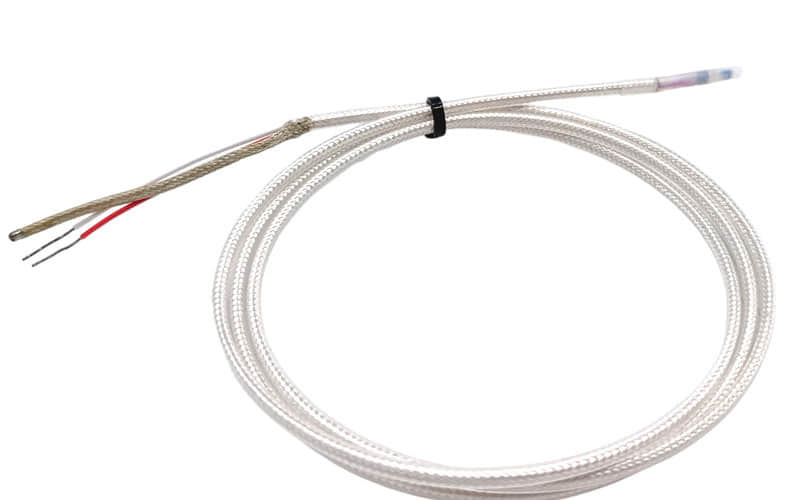
Industrial Temperature Probes (Tyco / Raychem RTD PT100 and Thermocouple Series)
Temperature sensors provide continuous and stable temperature signal feedback to the temperature control panel, serving as the foundational components for precise closed-loop temperature control.
Technical Essentials:
RTD PT100: Utilizes platinum resistance sensing elements, featuring high precision and stability, suitable for wide-temperature measurement from -200°C to +600°C.
Thermocouple: Features fast response time and wide temperature measurement range, specially designed for high-temperature industrial monitoring.
Structural Types: Surface-mounted types use dedicated clamps to tightly fit the measured surface; immersion types are used for direct measurement of internal media in pipes and tanks.
Installation Precautions: Thermal cable wiring spacing should not be too wide; looping or serpentine wiring methods are commonly used. Bending radii must not be less than the specified minimum limit to prevent measurement errors caused by stress.
3. Selection Recommendations and Industrial Application Guide
Selection by Application Scenario
l Power Energy Scenario: Desulfurization and denitrification pipelines, water-steam sampling lines, circulating water pipes, instrument tubing, and outdoor equipment freeze protection. Self-regulating heating cables are recommended due to their excellent energy efficiency and ultra-low maintenance costs.
l New Energy Scenario: Municipal water supply, fire protection line freeze protection, photovoltaic and wind power supporting lines, and energy storage equipment temperature control protection. For emerging fields such as solar thermal molten salt storage and battery production, high-temperature molten salt mineral insulated heating cables (withstanding up to 650°C with 98% thermal conversion efficiency) can be utilized.
l Industrial Scenario: Process pipeline constant temperature in pharmaceutical, food, and paper industries, as well as precision instrument lines and small tank precise temperature control. Constant wattage heating cables featuring stable output power, fast warm-up, and high precision are recommended, accommodating 120-180°C high-temperature processes.
l Severe Outdoor Scenario: Coastal salt spray, alpine cold, high humidity, and frequent mechanical impact exposed pipelines and equipment. MI mineral insulated heating cables (inorganic magnesium oxide insulation + seamless metal sheath) are recommended, offering 800°C high-temperature resistance, crush/water resistance, explosion protection, and strong corrosion/salt-spray resistance.
Selection by Brand and Technical Strength
International Leading Brands:
Vent RAYCHEM: Global pioneer in self-regulating electric trace heating technology, offering full-lifecycle services.
Thermon: Leading global industrial heating enterprise with extensive successful cases in the petrochemical sector.
BARTEC: Global explosion-proof solution provider tailored for stringent explosion-proof requirements in natural gas and chemical industries.
Domestic Leading Enterprises:
Anhui Anbang Electrical Group: Chief editor of the national standard for "Self-Regulating Heating Cables," with products deployed in national-level projects like the West-East Gas Pipeline and Beijing Daxing Airport.
Anhui Huanrui Electric Heating Equipment: National-level specialized "Little Giant" enterprise, with high-performance 200°C+ self-regulating products reaching international leading levels, applied in Fuxing bullet trains and CNOOC projects.
Wuhu Jiahong New Materials: Comprehensive product lines covering self-regulating, constant wattage, and skin-effect types, with a global footprint across over 70 countries.
Temperature Control System Selection Points
For high-standard explosion-proof locations such as petrochemical, pharmaceutical, food processing, long-distance industrial transport pipelines, and hazardous zone piping, smart digital/PLC centralized temperature control systems should be prioritized. These systems offer precise control, multi-loop centralized management, and explosion-proof compatibility with high safety ratings.
4. Systemized Overall Architecture Recommendations
A complete electric trace heating system should construct a four-in-one architecture: "Core Heating Module + Intelligent Control Module + Protective Installation Module + Operation & Maintenance Monitoring Module":
Core Heating Cable Module: Full working condition adaptation, with all products meeting national explosion-proof, IEC, and ATEX authoritative certifications.
Intelligent Control Module: Paired with thermostats or control cabinets to ensure long-term stable operation.
Protective Installation Module: Integrated pre-insulated heating cables eliminating secondary on-site insulation construction, offering strong sealing and anti-leakage performance.
Operation & Maintenance Monitoring Module: Equipped with thermal cable surface monitoring technology to achieve long-distance status warning and alarm functions.
5. Engineering and Compliance Under Tyco Thermal Controls LLC Standards
Global Certifications and Hazardous Area Compliance
Core Certification Systems: Strictly complies with ATEX (EU explosion-proof), IECEx (International Electrotechnical Commission), UL (North American market), and CSA (Canada) standards, ensuring global market access.
Hazardous Area Protection Design: Employs dual explosion-proof and intrinsically safe protection strategies, achieving an IP68 enclosure rating (supporting 5-meter water immersion for 72 hours of normal operation) to guarantee absolute safety in flammable and explosive environments.
System Lifespan and Reliability Assurance
Materials and Craftsmanship: The core utilizes semi-crystalline polymer and carbon black blended conductive polymer PTC cores, processed via radiation cross-linking and multi-layer composite structural designs; paired with laser welding and vacuum nitrogen-charging sealing technologies, providing outstanding anti-aging performance.
Core Reliability Indicators: Sensor annual drift controlled within 0.02%; pressure resistance rating 10MPa (withstanding 20G mechanical vibration); insulation resistance reaching 100M; zero-point and sensitivity temperature drift both below $0.5\%\text{FS}$.
Circuit Design Engineering Best Practices
Power Distribution Loop Planning: Single-loop installation length controlled within 50 meters to keep voltage drop within acceptable ranges; accurately matching starting and working currents for circuit breaker selection to prevent nuisance tripping.
Installation Construction Points: Parallel installation on horizontal pipes should position heating cables at the bottom of the pipe to optimize heat conduction; freeze protection sensors should be installed on the upper part of the pipe away from direct contact with heating cables; insulation layers must be tightly sealed to eliminate blind spots.
Common Misconceptions Avoidance: Strictly execute insulation protection for joints and end cores; self-regulating heating cables allow cross-over overlapping winding, whereas constant wattage heating cables strictly prohibit such operations.
6. Installation, Commissioning, and Maintenance Guide
I. Pre-Installation Verification and Insulation Integrity
Heating Cable Installation Standard Specifications
Pre-Installation Inspection Points:
Verify that heating cable models match design drawings and check for physical damage.
Confirm power supply voltage matches cable rated voltage, completing insulation performance tests and controller calibration state checks.
Heating cable installation length must be less than 50 meters to maintain acceptable voltage drop.
Installation Process Requirements:
For parallel installation on horizontal pipes, place heating cables at the bottom of the pipe to achieve efficient heat transfer and minimize heat loss.
Heating cables must tightly fit the pipe surface, secured with dedicated clamps to ensure good contact between heating elements and the surface.
Use compensatory wrapping processes for special areas like elbows and flanges to ensure balanced thermal fields. Cable spacing should be controlled within reasonable limits 10cm, avoiding cross-overs (in compliance with GB/T 19835 standards).
Wiring and Sealing Treatment:
The two core wires of heating cable joints and end tips must be staggered by at least 2 cm to thoroughly eliminate short-circuit risks.
Use waterproof sealing adhesive and waterproof insulating tape according to specifications to guarantee superior waterproof performance.
Ensure connection and end tips are positioned in the middle layer of double-layer insulation to prevent localized heat loss.
RTD / Thermocouple Probe Fixing Specifications
Installation Position Selection:
Horizontal Pipes: Probes should be installed at the lower 1/4 position of the pipe (approx. 45° from the bottom) to prevent condensate or media deposition from affecting temperature measurement (referencing ASME B31.3 standards).
Vertical Pipes: Prioritize placement upstream of media flow, at least $30\text{cm}$ away from elbows or valves to reduce turbulence interference. Probe-to-cable spacing must be maintained at 5–10cm (per IEC 62395-2 standards); too close causes high temperature readings, too far causes response lag.
Fixing and Protection Requirements:
When using stainless steel armored probes, ensure tight contact with the measured surface (gap 0.5mm, filled with thermal conductive silicone grease.
Prohibit fixing probes directly onto heating cables to prevent "self-heating effects" causing temperature control failure.
Freeze protection sensors should be installed on the upper part of the pipe (opposite to the heating cable direction) and strictly prohibited from direct contact with heating cables. Outdoor pipe probes require rain shields and should avoid direct sunlight.
Insulation Layer Installation Standards
Insulation materials must completely cover heating cables with no exposed sections; joints must tightly fit to prevent heat loss.
Use customized insulation covers or on-site foaming for irregular components like valves and flanges.
Exterior metal protective layers can be added depending on working conditions to comprehensively improve mechanical protection levels.
II. System Commissioning and Loop Calibration
Insulation Resistance Testing
At an ambient temperature of 75°C, use a 2500VDC megohmmeter for 1 minute testing; minimum insulation resistance between conductors and shielding should reach 100M.
Periodically check probe insulation resistance (test voltage 500VDC), ensuring values exceed 100M.
Verify phase connections prior to energization to ensure correct wiring.
Controller Setpoint Verification
Temperature Parameter Setting:
Freeze protection system maintenance temperature is typically set to 5C (referencing NFPA 70); process trace heating is set according to media characteristics (e.g., asphalt pipelines maintained at $60–80^\circ\text{C}$, ASTM D4402 standards).
Input target temperature parameters via the digital control panel, selecting PID control, on-off control, or smart algorithm adjustment modes.
Functional Test Workflow:
Step-by-step debugging of temperature control parameters to target working ranges, setting temperature fluctuation allowable ranges and over-temperature alarm thresholds.
Verify whether over-temperature alarms, fault diagnostics, remote monitoring, and data recording functions operate normally.
Multi-Loop Control Box Functional Testing
For smart digital/PLC centralized temperature control systems, verify multi-loop centralized management functions (temperature display, fault alarm, remote start/stop, data monitoring).
Test MODBUS communication status to ensure seamless integration into DCS systems.
Check contactor or solid-state relay response to temperature controller switching commands, and confirm normal operation of residual current devices (RCD) in humid or hazardous zones.
III. Preventive Maintenance Framework
Periodic Inspection for Moisture Ingress
Monthly checks on terminal tightening status, regularly inspecting heating cable outer jackets for damage or aging signs.
Check sealing performance of junction boxes and terminal enclosures, cleaning dust from controller cooling vents.
Reviewing Controller Alarm Logs
Check alarm records quarterly, analyzing abnormal temperature trends and historical temperature curves.
Connect to plant control systems via RS485 interfaces for real-time monitoring of multi-loop operation status and temperature data, transitioning from "reactive post-failure maintenance" to "predictive pre-failure warning."
Calibrating Temperature Sensors
Cycle and Standards: Perform probe calibration every 6 months with an allowable error of 1C (industrial probe standards); high-end sensor annual drift should be controlled within 0.02%.
Maintenance Operation Points: Keep thermocouple protection tube exteriors clean to reduce thermal resistance errors; check probe-to-surface contact conditions, replenishing thermal conductive grease when necessary; regularly inspect protective tubes for corrosion or deformation in high-temperature applications.
Typical Fault Prevention and Emergency Handling
Localized Overheating Prevention: Regularly inspect insulation layer integrity and surface deposits; confirm PTC critical temperature characteristics function normally for self-regulating heating cables (typically 65C).
Circuit Protection and Compensation: Install ground fault circuit interrupters to prevent leakage risks; master resistance measurement techniques to quickly locate open or short circuits; establish temperature-power dynamic adjustment models and increase outdoor pipe inspection frequencies ahead of extreme low-temperature seasons.
7. Summary and Supply Chain Support
Unified Thermal and Sensing Ecosystem Integration
Integrating rugged heating cables, high-precision controllers, and reliable sensors into a single efficient architecture is core to ensuring all-weather safe operation of industrial facilities.
This system-level synergy eliminates individual device silos, providing comprehensive temperature control and safety protection for complex pipe networks and process media.
Industrial Project Procurement and Sourcing
For plant expansions, retrofitting, or emergency repairs, procuring genuine factory-original hardware serves as the cornerstone for long-term safe and stable system operation.
Selecting compliant components meeting stringent international certification standards effectively prevents unplanned downtime and reduces overall operational risks.
Direct Contact with Supply Chain Teams
Engage professional supply chain teams to instantly verify spot inventory, precisely match technical specifications, and efficiently arrange global secure logistics delivery.
8. Frequently Asked Questions (FAQ)
Q1: What is the maximum maintenance temperature for Tyco/Raychem BTV self-regulating heating cables?
A: The maximum maintenance temperature for the BTV series self-regulating heating cables is 65°C.
Q2: What is the main advantage of using smart digital/PLC centralized temperature control systems?
A: They provide precise temperature control, multi-loop centralized management, advanced PID energy-saving algorithms, and high-standard explosion-proof compatibility.
For more: Tyco Security Systems: Selection and Technology Guide
Back to the top: Tyco