
Previous
Next
Gould Modicon Legacy Systems | Modern Migration & Upgrade Guide
Overview
The evolution of industrial automation rests on decades of rugged control architecture. In the late 1960s and 1970s, Modicon introduced the world's first programmable logic controller, transforming factory floors. Following Gould's acquisition of Modicon in 1977, the Gould-Modicon partnership set high benchmarks for industrial durability, establishing foundational logic for heavy industries globally. Understanding this lineage helps plant managers maintain aging assets and ensures a smoother transition to current Schneider Electric platforms.
1. The Legacy Landscape: Early Systems & the Modicon 984 Series
The Modicon 984 series is a classic mid-range PLC platform introduced by Schneider Electric (formerly Gould Modicon) in the 1980s and 1990s, boasting a massive installed base in heavy industries.
Hardware Architecture: Its modular backplane design houses CPU processors, power supplies, I/O modules, and specialized communication processors like Modbus Plus.
Processor & Memory: Models such as the 984-120, 984-380, and 984-680 feature dedicated user storage, programmed via legacy tools like the P190 programmer or Modsoft software.
Native Connectivity: Built-in support for Modbus RTU and high-speed Modbus Plus networks made it an industrial standard. The original Gould-Modicon register conventions, including 40001 holding registers, remain universal industrial communication languages today.
Heavy Industry Presence: In steel, cement, power, petrochemicals, and water treatment, the 984 series remains deployed in critical control loops spanning over 25 years.
Hardware Aging & Sourcing Pain Points
Operating legacy Modicons introduces growing operational risks:
Component Aging: Electrolytic capacitors, batteries, and communication chips suffer degradation from prolonged heat exposure, leading to crashes and lost programs.
Depleted Spare Parts: Schneider Electric discontinued production years ago. Current market stock relies on used or third-party refurbished parts with variable quality and rising costs.
Maintenance Skills Gap: Engineers familiar with 984 architecture are retiring, while newer technicians specialize in modern platforms like M340, M580, or Quantum.
Software Incompatibility: Modsoft relies on legacy operating systems, complicating backups and blocking integration with modern MES or SCADA networks via Modbus TCP.
2. Modernizing Modicons: Why Upgrade to Current Platforms?
The Modicon 984 series remains present in heavy industries, but technological gaps compared to modern Schneider controllers are significant.
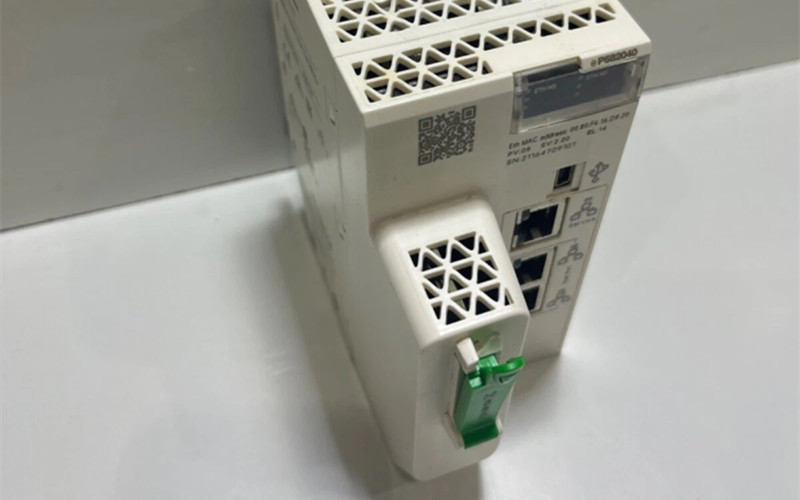
| Comparison Area | Legacy 984 Systems | Modern Schneider Platforms (M340 / M580) |
| Processing Speed | Millisecond instruction execution | 32-Bit RISC performance (Boolean: 0.12--0.18s) |
| User Memory | Restricted memory (e.g., 984-680 supports 16K) | Scalable memory up to 3584KB for complex algorithms |
| Network Integration | Slow serial Modbus RTU and 1Mbps Modbus Plus | Industrial Ethernet (Modbus TCP/IP, EtherNet/IP at 100Mbps), USB, CANopen |
| Software Environment | Outdated tools like Modsoft on legacy OS | EcoStruxure Control Expert (Unity Pro) supporting IEC 61131-3 |
| Data Backup | Battery-dependent volatile memory | Secure SD Card backup modules (e.g., BMXRMS008MP) |
Economic Justification
Downtime Reduction: Eliminates costly production stoppages caused by component failures.
Reduced Maintenance: Lowers long-term repair costs while enabling predictive maintenance.
Process Optimization: Enhances throughput via faster execution and flexible networking.
Talent Alignment: Aligns with engineers trained on modern IEC 61131-3 development suites.
3. Seamless Migration & Replacement Pathways
Upgrading a legacy Modicon 984 system requires a structured, phased approach to eliminate production risks and maximize return on investment.
System Assessment & Strategy: Document rack configurations, CPU part numbers (e.g., 984-120, 984-380, 984-680), I/O module quantities, power supplies, and communication cards before initiating migration.
Architecture Decoupling & Bus Adaptation: Design a hybrid bridge architecture using protocol converters to bridge legacy Modbus RTU/Plus with modern Ethernet architectures.
Phased Cutover & Parallel Running: Upgrade non-essential subsystems first (like cooling pumps or auxiliary ventilation) to test communication bridges in live environments before core takeover.
Validation & Knowledge Transfer: Validate I/O points, communication links, and alarm triggers. Upskill maintenance staff on EcoStruxure Control Expert and IEC 61131-3 programming environments.
4. In-Stock Availability & Migration Support
When critical vintage hardware fails, waiting weeks for obsolete parts is not an option. We maintain a robust, ready-to-ship inventory of genuine legacy and modern Modicon components to keep your facilities running without interruption:
100% Original & Verified: Sourced through trusted channels to ensure seamless compatibility with your existing architecture.
Global Express Shipping: Fast worldwide dispatch to minimize costly plant downtime during unexpected equipment faults.
12-Month Warranty: Full quality assurance backing every component we supply for absolute operational peace of mind.
Request a Quote/Technical Support:Ready to secure your hardware or need assistance with your Modicon system migration? Feel free to contact our techincal sales team for immediate response with pricing and availability.
Back to the top: Modicon PLC