Previous
Next
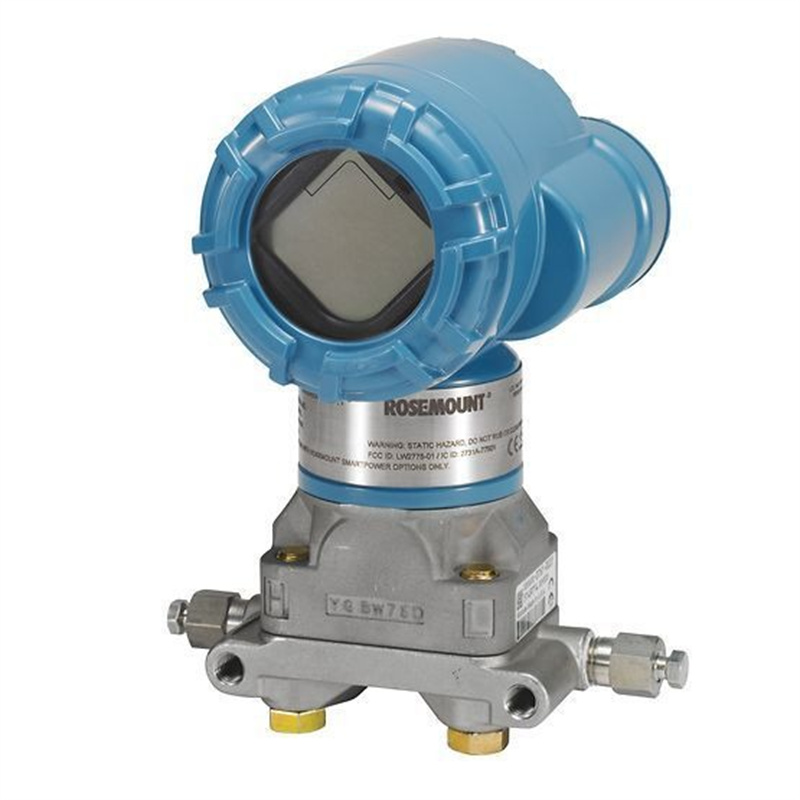
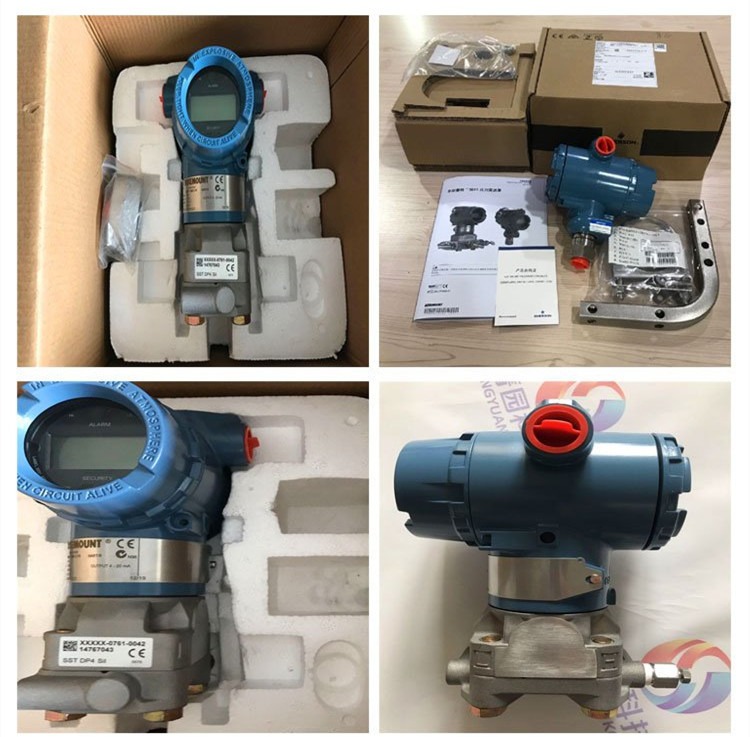
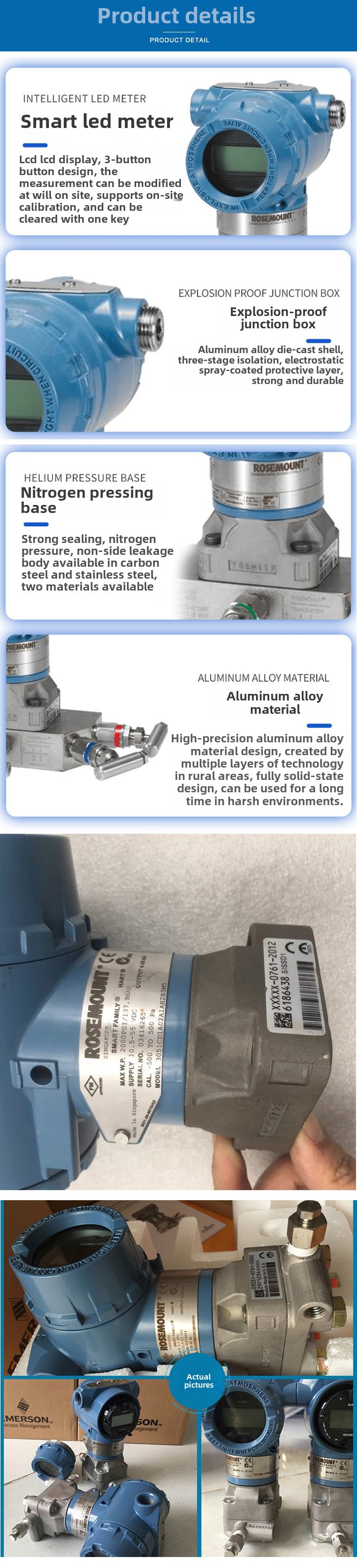
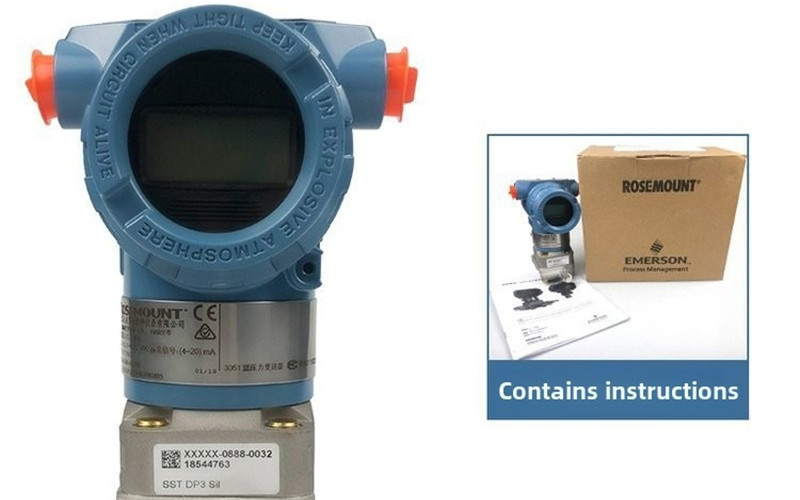
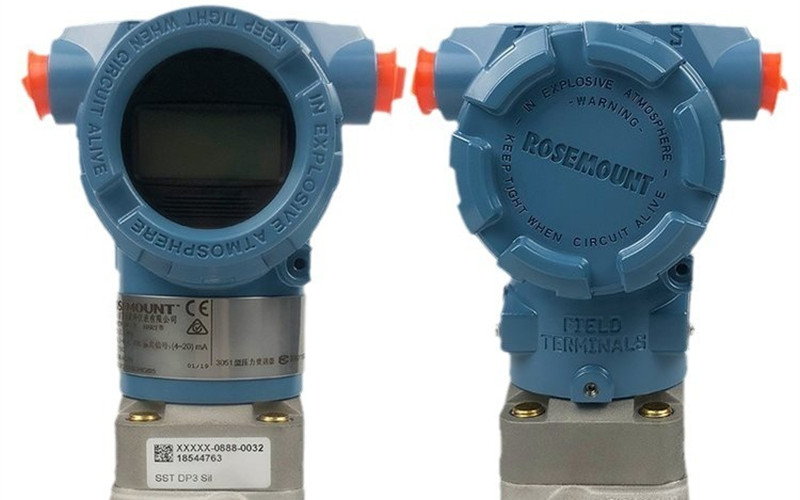
Rosemount 2051C Coplanar Pressure Transmitter
1. General Description
The Rosemount 2051C Coplanar Pressure Transmitter is the industry standard for differential and gage measurements. This Coplanar Pressure Transmitter delivers incredible accuracy in pressure, flow, and level applications, making it ideal for a wide variety of industrial processes.
This device measures differential pressure (DP) and gauge pressure (GP). It uses an extremely sensitive pressure sensor and a special capacitance sensing element. This design helps it achieve high accuracy and long-term stability.
Engineers value the patented Coplanar platform because it simplifies integration with manifolds, orifice plates, diaphragm seals, and other primary elements. It supports multiple types of pressure measurements, including gauge measurements, atmospheric pressure, and liquid levels, ensuring flexibility across different types of pressures.
2. Technical Specifications
l Measurement Range: 0.5 inH₂O to 2000 psi (1.2 bar to 276 bar), covering a wide range of pressure ranges and full scale applications
l Accuracy: Standard ±0.075%, optional ±0.05% (high accuracy)
l Stability: Two-year stability of ±0.10%, optional five-year stability
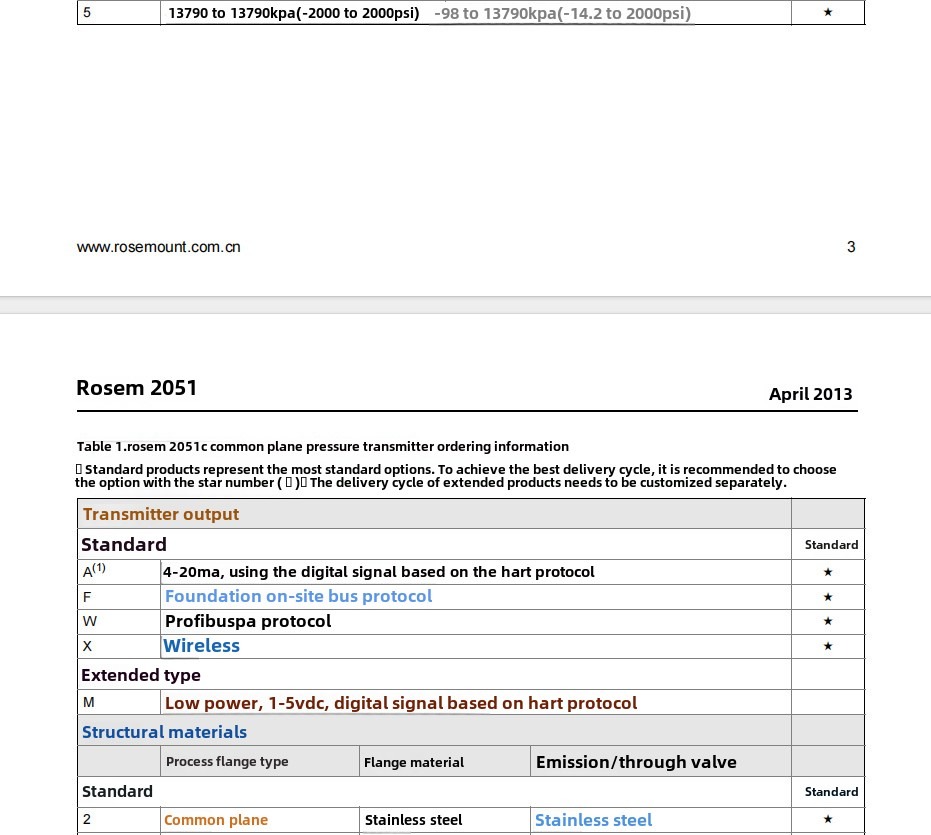
l Output Signal: 4–20 mA HART®, Low Power HART®, FOUNDATION Fieldbus
l Power Supply: 10.5 to 42 VDC
l Wetted Materials: 316L stainless steel, Hastelloy C-276
l Temperature Range: -40 to 185°F (-40 to 85°C)
l Weight: Approx. 3.8 lbs (1.7 kg)
3. Features
A. Coplanar Technology: Industry-proven design for direct mounting to pressure transmitters, flow, or level solutions.
B. Local Operator Interface (LOI): Easy-to-use menus to configure types of pressure measurements.
C. Wide Range Capability: Up to 100:1 turndown ratio for flexible flow rates and process connections.
D. Safety-Certified: SIL2/3 safety-certified to IEC 61508 for safe deployment in high-risk environments.
4. Rosemount 2051C Differential and Gauge Pressure Transmitter Applications
The Rosemount 2051C excels in applications that require reliable differential pressure gauges and gauge pressure monitoring. Its robust design and adaptability make it the industry standard for:
l Oil and gas production with high pressure operations
l Water and wastewater treatment involving variable liquid levels
l Chemical processing requiring precise flow rates
l HVAC systems monitoring atmospheric pressure conditions
Also widely deployed with in-line pressure transmitter configurations for expanded functionality.
5. Installation Procedure (Step by Step)
Preparation:
Gather tools and ensure the environment is suitable for installing pressure transmitters.
Mounting:
Select a vibration-free location. Use proper hardware for securing the Coplanar Pressure Transmitter.
Wiring:
Connect power according to the wiring diagram. Ensure proper grounding for reliable pressure sensor readings.
Calibration:
Calibrate for differential pressure (DP), gauge pressure (GP), or other required types of pressures.
Configuration:
Use LOI or FOUNDATION Fieldbus to configure pressure ranges and verify output signals.
Testing:
Confirm accurate measurement of types of pressure measurements such as atmospheric pressure or liquid levels.
Final Step:
Secure all process connections and document installation parameters for future reference.
6. Related Models
l Rosemount 2051CD – Differential Pressure Transmitter with advanced features
l Rosemount 2051T – In-Line Pressure Transmitter for expanded types of pressures applications
Rosemount 3051CD Differential Pressure Transmitter
Rosemount 2051L Flange Diaphragm Level Transmitter
Rosemount 2088 Gauge and Absolute Pressure Transmitters
Rosemount 3051CG Gauge Pressure Transmitter