
Previous
Next
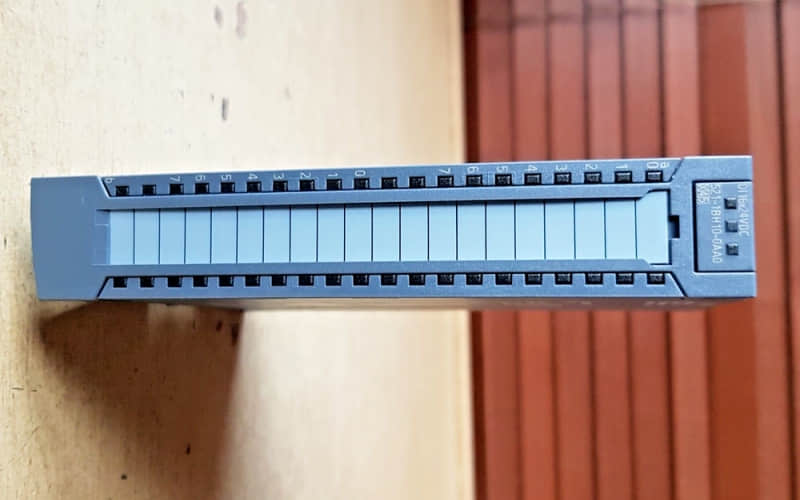
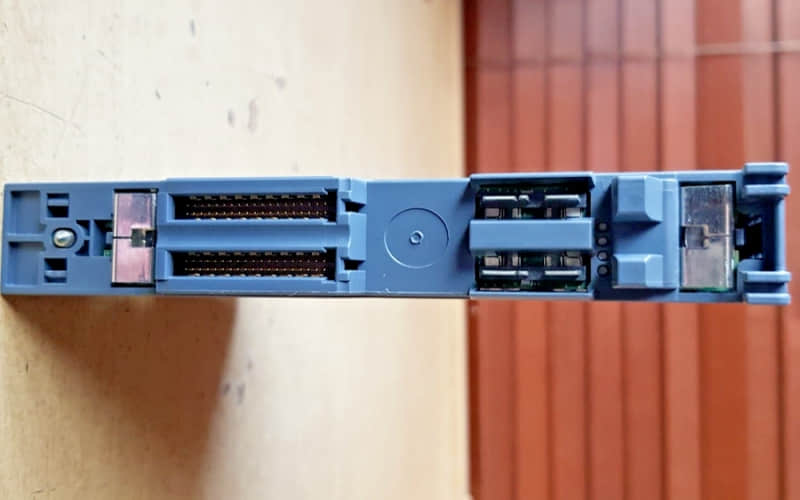
6ES7521-1BL10-0AB0 Siemens SIMATIC S-1500 Module
1. Introduction
1.1Overview of Siemens SIMATIC S-1500
The Siemens SIMATIC S7-1500 is a powerful and versatile programmable logic controller (PLC) designed for advanced automation tasks. It belongs to the SIMATIC family and delivers exceptional performance with fast processing speeds and precise motion control.
Siemens engineered the S7-1500 with integrated system diagnostics and strong cybersecurity features to support complex industrial applications. Its modular design allows users to configure the system flexibly using a range of CPUs and technology modules.
The built-in display, real-time trace functions, and intuitive diagnostics simplify both commissioning and maintenance. Engineers can use the TIA Portal for seamless integration and programming. With support for PROFINET and other communication protocols, the S7-1500 enables efficient connectivity and scalable automation solutions.
1.2 Importance in Process Automation
The Siemens 6ES7521-1BL10-0AB0 is a digital input module in the SIMATIC S7-1500 series used for process automation. It has 16 digital inputs operating at 24 V DC, which lets users reliably receive signals from sensors.
Its fast response time enables engineers to capture data in real time, ensuring precise and reliable control. The module also provides strong noise immunity, which helps maintain stability in demanding environments.
Siemens integrated built-in diagnostics to support quick fault detection and minimize downtime. Engineers can configure and manage the module easily through the TIA Portal. With reliable performance and easy integration, this module enhances both system efficiency and process reliability.
1.3 6ES7521-1BL10-0AB0 Benefits
The Siemens 6ES7521-1BL10-0AB0 digital input module delivers multiple benefits in industrial automation. It supports 16 digital inputs at 24 V DC, allowing engineers to capture and process signals in real time.
The module strengthens system reliability. Its strong noise immunity helps maintain stable performance, even in electrically noisy environments. Engineers can use the built-in diagnostics to identify faults quickly and minimize downtime.
Its compact, modular design saves space and allows flexible installation. Engineers can easily integrate and configure the module through the TIA Portal, streamlining both setup and maintenance.
Designed for durability, the module performs reliably in harsh industrial conditions and ensures long-lasting operation.
1.4 siemens 6es7521 1bl10 0aa0
l General Information
l Product Type: Digital Input Module
l Series: SIMATIC S7-1500
l Article Number: 6ES7521-1BL10-0AA0
l Input Specifications
l Number of Inputs: 16
l Input Type: Digital
l Input Voltage: 24 V DC
l Input Current: 3 mA (per input)
l Input Delay (for 0 → 1): 0.2 ms (typical)
l Input Delay (for 1 → 0): 0.2 ms (typical)
l Electrical Specifications
l Isolation: Yes, optically isolated between channels and backplane
l Rated Insulation Voltage: 250 V (against ground)
l Reverse Polarity Protection: Yes
l Diagnostics
l Channel Diagnostics: Yes
l Wire Break Detection: No
l Short Circuit Detection: Yes
l LED Indicators: Yes (per channel)
l Mechanical and Environmental
l Mounting: DIN rail
l Dimensions (W x H x D): 35 mm x 147 mm x 129 mm
l Weight: Approx. 250 g
l Operating Temperature: 0 to +60 °C
l Storage Temperature: -40 to +70 °C
l Communication & Integration
l Backplane Bus: PROFINET via S7-1500 base
l Engineering Tool: TIA Portal
l Compatible with: S7-1500 CPUs
1.5 siemens 6es7521 1bh00 0ab0
l Max input current: ~20 mA total; ~2.5 mA per channel at "1" level
l Input delay: Configurable from 0.05 ms to 20 ms
l Special Features
n Counter functionality on channels 0 and 1: up/down counting up to 6 kHz, 32‑bit resolution
n Interrupt capability: Configurable per channel via hardware interrupts
n Diagnostics & I&M data: Channel diagnostics, wire-break detection, configurable per channel,
n Isochronous & prioritized startup modes supported
l Mechanical & Environmental
n Dimensions: 35 × 147 × 129 mm; Weight: ~240–277 g
n Operating Temp: –30 °C to +60 °C (horizontal); +40 °C (vertical)
n Altitude rating: Up to 5,000 m (with/ restrictions above 2,000 m)
l Integration & Standards
n Backplane Power Consumption: 1.1 W
n Power Loss (typ): 2.6 W
n Compliance: IEC 61131 input type 3, PROFIBUS/PROFINET support (GSD V1.x / V2.3)
n Isolation Tested: 707 V DC between channels & backplane
2. Key Features
2.1Reliability and Performance
The Siemens 6ES7521-1BL10-0AB0 digital input module delivers outstanding reliability and performance in industrial automation. It offers 16 digital inputs at 24 V DC, allowing engineers to capture signals quickly.
Engineers rely on its robust noise immunity to maintain stable operation in harsh environments with electrical interference. The module includes built-in diagnostics, enabling early fault detection that helps reduce downtime and speeds troubleshooting.
Siemens designed the module for seamless integration with the S7-1500 system and TIA Portal. Its modular and durable structure supports long-term performance and flexible configurations. In manufacturing, process control, or infrastructure, this module ensures dependable automation support.
2.2Integration with Industrial Control Systems
The Siemens 6ES7521-1BL10-0AB0 integrates seamlessly with industrial control systems, especially within the SIMATIC S7-1500 environment. Engineers connect this digital input module easily using the PROFINET communication protocol, which ensures fast and reliable data exchange.
Its compatibility with the TIA Portal simplifies configuration, programming, and diagnostics. This reduces engineering time and effort. The module’s modular design lets engineers expand systems flexibly and integrate components without hassle.
With built-in diagnostics and standardized interfaces, it improves system transparency and streamlines maintenance. This smooth integration supports scalable and efficient automation solutions in manufacturing, process control, and infrastructure industries.
3. Applications
3.1Machine Automation
The Siemens 6ES7521 1BL10 0AB0 digital input module plays a vital role in machine automation. It captures digital signals from sensors accurately, enabling precise monitoring of machine states and operations.
Engineers rely on this module to process inputs quickly, which is essential for real-time control and safety functions. Its robust design withstands industrial environments, maintaining stable performance despite electrical noise and vibrations.
The module integrates smoothly with the S7-1500 PLC and TIA Portal. This integration simplifies programming and diagnostics, helping engineers reduce downtime. Overall, the module enhances machine efficiency, reliability, and safety in automated manufacturing and production systems.
3.2 Factory Automation Solutions
The Siemens 6ES7521 1BL00 0AB0 digital input module plays a crucial role in factory automation solutions. It captures precise digital signals from sensors and switches on the production floor, enabling accurate monitoring.
Engineers use this module to acquire data quickly and reliably, supporting real-time decision-making and smooth machinery operation. Its robust design ensures stable performance in harsh factory environments with electrical noise and vibrations.
The module integrates seamlessly with the S7-1500 PLC and TIA Portal. This integration simplifies system configuration and diagnostics, helping engineers reduce downtime and improve process efficiency.
4. Siemens Diagnostics
4.1Benefits of Diagnostics in PLC Modules
The Siemens 6ES7521-1BL10-0AB0 digital input module offers advanced diagnostics that greatly benefit PLC systems. It provides real-time status updates for each input channel, helping engineers detect faults quickly.
Early fault detection helps engineers prevent unexpected downtime and costly repairs. The module’s diagnostics simplify troubleshooting by pinpointing the exact location and nature of issues.
Engineers access diagnostic data directly through the TIA Portal, which streamlines maintenance and reduces response times. These diagnostic capabilities improve system reliability, enhance operational safety, and boost maintenance efficiency in automation environments.
4.2Troubleshooting and Maintenance
4.2.1 Troubleshooting
Check the module’s LED indicators. They show the status of each input channel and the overall module health. If an LED is off or behaves abnormally, engineers should inspect the wiring or power issues.
Use the TIA Portal diagnostics to view detailed error messages. The module reports faults like short circuits or signal loss, helping engineers identify problems quickly.
Verify all input wiring. Inspect for loose connections and measure voltage levels to ensure they meet the 24 V DC specification.
Test each input individually by simulating signals to confirm proper channel response.
4.2.2 Maintenance
Engineers should perform regular visual inspections to spot physical damage, dust, or corrosion on the module and wiring.
They must keep the firmware updated using Siemens tools to ensure optimal performance and access to new features.
Maintaining a clean, vibration-free environment helps extend the module’s lifespan.
Lastly, regularly back up the TIA Portal project and module settings to enable quick restoration after repairs.
5. Automation Engineering
5.1Role of Automation Engineering in Control System Integration
Automation engineers play a key role in integrating the Siemens 6ES7521-1BL10-0AB0 digital input module into control systems. They design and configure the module to capture signals accurately from sensors and field devices, ensuring reliable data input.
Engineers program the module using the TIA Portal. They set up diagnostics and communication protocols to optimize performance and simplify troubleshooting.
They coordinate the module’s integration with other PLC components and industrial networks. This ensures seamless data flow and system interoperability.
By choosing the right module configuration and maintaining system standards, engineers enhance control system efficiency, reliability, and scalability. Their work supports smooth and flexible automation solutions.
5.2 SIMATIC Programming Techniques
SIMATIC programming techniques include the methods to create efficient programs for Siemens PLCs, especially the SIMATIC S7 series. Engineers commonly use programming languages like Ladder Logic (LAD), which is similar to high-level languages such as Pascal.
Engineers organize code into reusable blocks through modular programming. This approach improves clarity and simplifies maintenance. They apply timed and counter functions, state machines, and data handling routines to manage complex processes effectively.
They also leverage diagnostic functions and implement error handling to enhance system robustness. Using the TIA Portal software, engineers streamline programming, testing, and debugging tasks.
By applying structured and standardized techniques, they create scalable, maintainable, and high-performance automation solutions.
Previous: Siemens 6ES7522-1BL10-0AA0 Digital Output Module