1. Introduction
In industrial combustion control, safe equipment operation depends on the precise response of core control modules. However, in recent years, counterfeit combustion modules have entered the supply chain through unauthorized channels. This has created serious challenges at production sites.
From sudden system downtime to serious safety risks, monitoring failures can be costly. Poor fit can also permanently damage expensive equipment. The cost of “inferior” parts often outweighs any savings.
As a practitioner who has worked in industrial control for many years, I have seen many production accidents.
Counterfeit components caused many of these. This is not just an economic loss, but a challenge to the bottom line of production safety. In the industrial automation market, with brands like Honeywell, spotting authentic parts is no longer trivial. Every technician and engineering manager must master this “survival skill.”
This guide gives you a practical way to identify issues. I base it on my field experience. It covers three areas: visual inspection, technical checks, and supply chain compliance audits. Whether you are a technician who maintains equipment, you can use this guide.
Whether you are a procurement manager who improves the supply chain, you can use the Honeywell burner control guide.
I hope it keeps production safe.
2. Visual Inspection: The "Devil in the Details"
Honeywell’s manufacturing process is rigorous. The visual details of its original Honeywell modules are hard for counterfeiters to match.
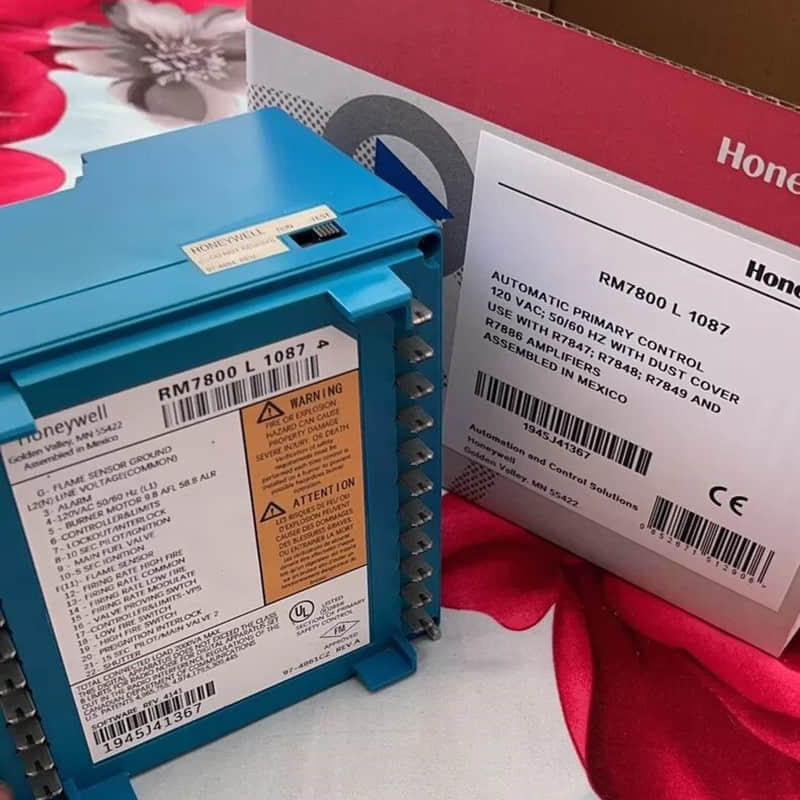
Labels and Printing: Original labels use special materials with a fine texture and strong toughness. Counterfeits often use plain paper or cheap plastic. They usually feel thin and rough.
The logos, text, and serial numbers on authentic labels are sharp and clear, with no blurring or ghosting. Each module has a unique serial number. You can verify it through official channels. If the serial number is missing or shows unusual records, proceed with caution.
Molding and Packaging: The quality of injection molding is the most direct indicator of a manufacturer's capability. Authentic housings have delicate parting lines and smooth edges without any burrs or flash. If you see seams off by more than 0.5 mm, or clear burrs on the edges, it often means poor molds. Authentic engineering plastics have uniform color and a consistent matte or frosted finish.
Counterfeits often have an unnatural, cheap gloss and may feel soft when pressed.
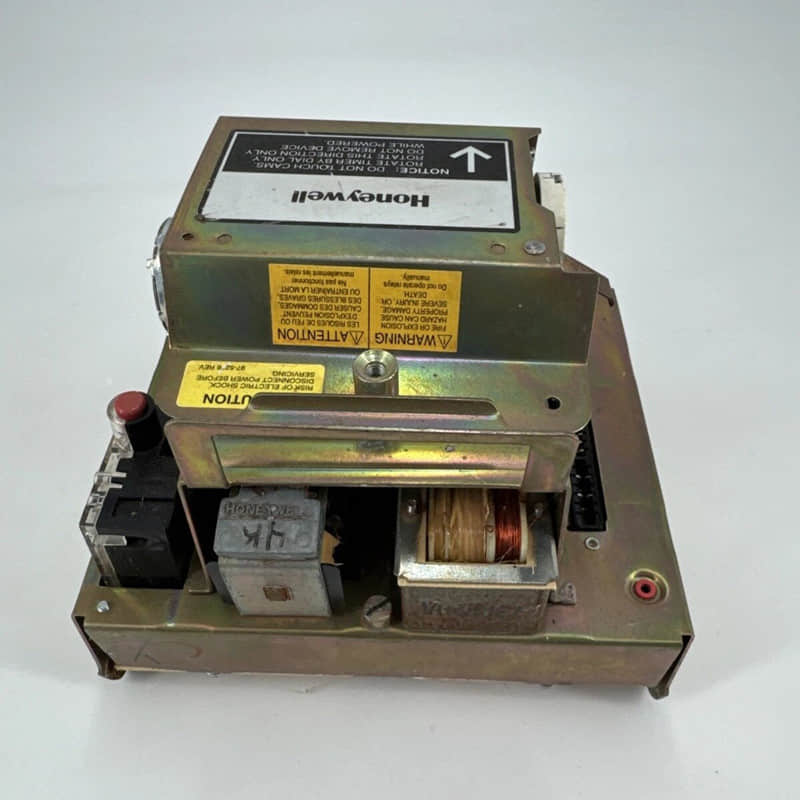
Circuit Boards and Components: Opening the housing to inspect the PCB layout is key to identifying technical "shortcuts." Authentic boards are well-organized with full, even solder joints. Be wary of boards with dull joints, cold solder, bridging, or tilted components, which are typical signs of non-standard production. Counterfeits often use salvaged "refurbished" parts or "cloned" components that fail to meet original standards for internal logic stability.
Expert Application Case: EC7823A1004 Combustion Controller
In practical procurement, the Honeywell EC7823A1004 is one example.
Its original packaging consistency is key.
It helps ensure frequency matching (50Hz/60Hz) in 220-240Vac environments. This model weighs approximately 0.8kg and demonstrates excellent structural rigidity in industrial installations. If the product you bought has issues with temperature control, voltage range, or packaging, check the batch number. It should match the product model exactly, like EC7823.
Important Reminder: Any core safety combustion control component priced far below the market average may signal supply chain risk. For example, if the typical price is about 1,500 Yuan. If you find suspicious points, stop using it immediately and contact the manufacturer for authentication.
3. Technical Verification: Detection Beyond the Surface
Because real Honeywell modules use accurate digital communication and built-in self-checks, they have unique “digital fingerprints.” These fingerprints are hard to copy.
Internal Communication and Fault Logic Verification: Authentic modules (for example, EC7895A/RM7895 series) include fast microprocessors. These can read core data directly through the Keyboard Display Module (KDM) or a PC interface.
Industrial module authentication modules return hardware IDs that match the model. Counterfeits often give no useful information or show garbled text. Furthermore, genuine units can record the exact run time and order of the last six faults.
Counterfeits either lack this feature or store corrupted data because of logic flaws.
Dynamic Self-Test Function: Authentic modules compliant with IEC 61508 (supporting SIL2/SIL3 applications) feature strict dynamic detection mechanisms. For example, AMPLI-CHECK® and safety relay tests monitor the flame amplifier circuit and safety relays in real time. Authentic modules can measure flame signal strength in real time, usually 0 to 100% or 0 to 5V.
They can also filter out arc light or background light interference.
We tightly control the flame-out response time to keep it within 1 second.
Performance Degradation Under Extreme Conditions: Authentic modules (e.g., R7849B1021/U) work from -20°C to +60°C. They keep timing accuracy within ±1% at 60°C. Counterfeits using salvaged or inferior components experience exponential increases in failure rates above 50°C.
Additionally, counterfeits often fail to close fuel valves within milliseconds during pre-purging or ignition. This can happen because of relay contact adhesion. This can directly increase explosion risks.
4. Supply Chain Safety: Controlling Risks at the Source
In the procurement of Honeywell combustion controller modules, supply chain transparency is the core defense against inferior products.
Authorized Channels: Choosing official authorized distributors is the most effective risk-control measure. Primary authorized distributors sign yearly agreements with Honeywell.
They pass strict compliance checks. They can provide original COCs (Certificates of Conformity). They also provide full quality traceability systems.
Price Traps: In a mostly transparent pricing system, a rock-bottom price is a clear warning sign.
For example, if it is over 30% below the market average, the source may be irregular. These prices often mean used, salvaged parts, fake Honeywell parts, or grey market goods.
These goods often come with no after-sales protection.
Compliance Documentation: To verify authenticity, check a complete identity chain. Include import customs declaration forms that match the order model and quantity. Review original Certificates of Conformity (COC) with the serial number and production date. Also confirm official logistics tracking from the manufacturer to the distributor.
5. Case Study: A Real Technical Verification Experience
In March 2026, a large chemical company hired me.
They asked me to verify a batch of Honeywell EC7890B1028 combustion program controllers they had bought. The enterprise was suspicious because the price was about 35% lower than the market average.
Preliminary Inspection: The samples had visible burrs and seam misalignment over 0.5 mm. Something blurred the labels. The official system could not check them.
Deep Disassembly: The internal circuit boards were messy, with parts tilted and connections bridged. The main control chip seemed "laser-erased" and reprinted. The capacitor specs looked much smaller. It seems we don’t need any further combustion control troubleshooting in this case.
Functional Testing: In performance tests, the timing logic error reached ±3 seconds. Genuine parts meet a ±0.5-second standard. The flame response delay reached 6 seconds. This exceeded the 4-second safety threshold.
Conclusion: I found this batch was counterfeit. I told the enterprise to stop using it at once. I urged them to buy only from authorized channels. I also urged them to hold the supplier legally accountable.
6. Conclusion and Call to Action
Honeywell combustion modules are central to industrial combustion control. They help ensure production safety and support long-term equipment operation. The gap between real and fake is not just about looks or price.
A “line of life and death” for human safety, production uptime, and equipment life.
Core Value: We never compromise on safety. Genuine modules meet global certifications like CE, UL 60730, CSA, and EN 298.
They also follow IEC 61508 safety standards.
Fatal Risks of Counterfeits: These parts lack safety certifications and compliance checks. They may respond late or explode without warning. There is no accountability or traceability.
Action Guidance: If you have doubts about modules currently in use:
Self-Checklist: Verify label sharpness, mold precision (seams and burrs), and operational stability (check for abnormal noise or overheating).
Professional Verification: Use the original setup software (for example, COMBUSTION SYSTEM MANAGER™) to read hardware IDs. Check firmware versions.
Confirm complete customs documents. Confirm original COCs. Confirm official serial number records.
Safety should never be a compromise. Ensure your combustion system operates under the protection of genuine Honeywell products.
Why Choose YMZDCS?
We provide high-precision industrial components from Honeywell, Siemens, Emerson, ABB, and Yokogawa.
Accuracy: We verify every specification to prevent costly procurement errors.
Reliability: We ensure authentic, high-quality sourcing for your critical systems.
Global Logistics: We handle complex documentation and safe delivery from Xiamen.
Proactive Service: We go beyond sales to support your operational success.
Professional sourcing, simplified.
Want to dive deeper into Honeywell combustion control verification? Access our full suite of professional resources below:
[Read the Full Technical Article on LinkedIn] — Join the professional discussion and see our latest field updates.
[Download the Visual Identification Guide (SlideShare)] — A high-resolution slide deck detailing the key visual "red flags" to watch for during on-site inspections.
[Access the Detailed Whitepaper & Case Study (Scribd)] — Download our comprehensive technical breakdown, including hardware logic analysis and real-world failure case studies.