1. Introduction:
High-pressure steam systems are notorious for thermal shock and pressure surges. In these environments, standard sensors often fail to maintain accuracy, leading to frequent signal drift and costly data errors.
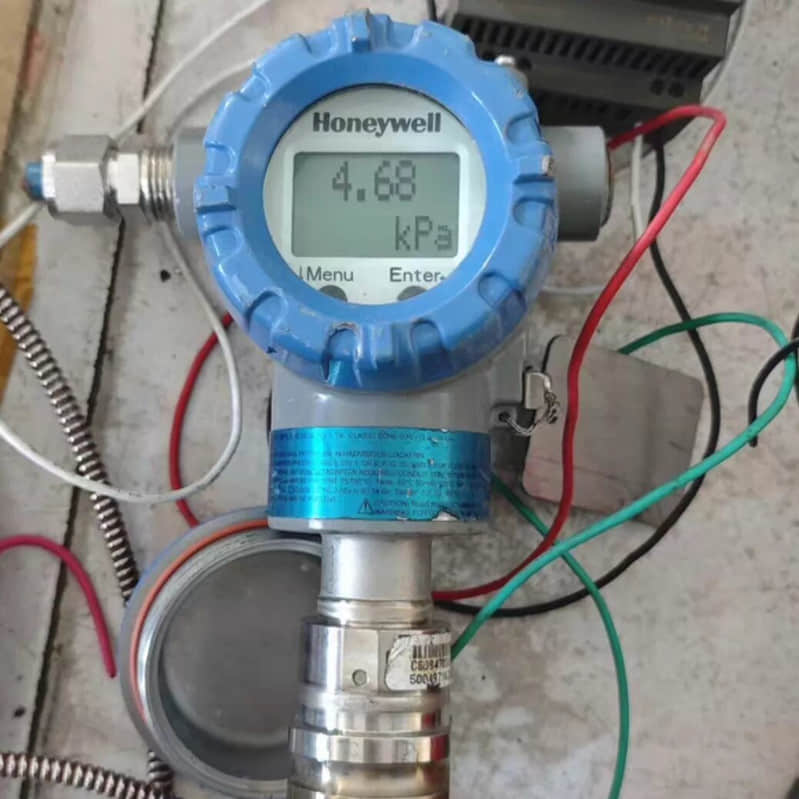
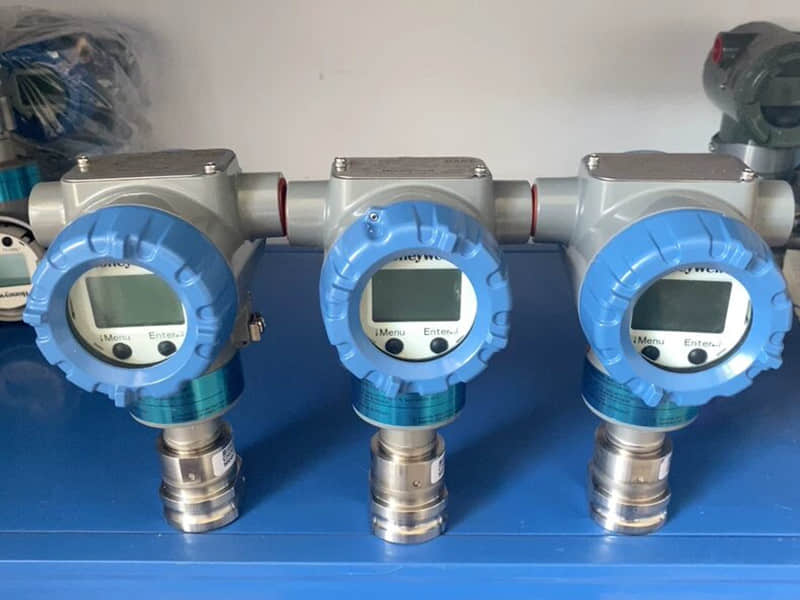
After years of troubleshooting industrial automation systems, we’ve found the Honeywell STG73S handles these conditions reliably. As a core model in the SmartLine pressure transmitter family, it handles high-pressure steam. This article explains why the STG73S performs well when others fail. It also shows how it helps you keep precise, stable measurements in steam applications.
2. Why STG73S Excels in High-Pressure Steam
In steam-dependent industries—chemical, power, and food processing—pressure stability is the baseline for process control and safety. High-pressure steam systems impose severe conditions: temperature swings, corrosive media, and persistent mechanical vibration. Standard sensors often suffer from seal degradation and signal drift under these conditions.
Honeywell engineers the STG73S to mitigate these failures. It combines advanced sensing technology with diagnostic logic to maintain measurement integrity in harsh high-pressure steam applications.
Precision Under Thermal Stress
Steam systems undergo constant temperature shifts during startup and load changes, which typically induce thermal drift in standard transmitters. The STG73S utilizes digital compensation algorithms to correct for these fluctuations actively.
By sensing ambient changes in real-time, the STG73S ensures accuracy remains consistent across the full operating range. With reference accuracy of 0.065% to 0.075%, it provides stable data.
This helps prevent control errors and process instability in industrial pressure measurement.
Material Resilience
High-pressure steam often carries contaminants that threaten sensor integrity. The STG73S addresses this through metallurgy:
Diaphragm Materials: Standard 316L stainless steel provides baseline protection, while options like Hastelloy C-276, Tantalum, or Titanium are available for highly corrosive environments.
Structural Integrity: Full-welded seals eliminate the risk of organic adhesive failure at high temperatures.
Pressure Rating: Designed to handle pressures up to 35 MPa, ensuring long-term structural reliability.
Proactive Diagnostics
Unplanned downtime is a high cost in continuous production. The SmartLine pressure transmitter benefits include integrated diagnostic electronics that monitor membrane health, electronic module temperature, and loop integrity.
When the transmitter detects abnormal trends—such as early-stage corrosion or component degradation—it triggers predictive warnings. This allows maintenance teams to schedule interventions rather than reacting to failures.
Honeywell STG73S Specifications
Feature | Specification |
Accuracy | Up to 0.065% (calibrated span) |
Stability | 0.01% of span per year (up to 10 years) |
Turndown Ratio | Up to 100:1 |
Response Time | 90ms – 100ms |
Material Options | 316L SS, Hastelloy C-276, Tantalum, Titanium |
Pressure Rating | Up to 35 MPa |
Protection Class | IP65 / IP67 |
Certifications | SIL2/3, NEPSI (Explosion-proof/Intrinsically Safe) |
3. Application Scenarios and Selection Guide
High-pressure steam systems demand high-performance instrumentation. Whether in power generation or petrochemical processing, the accuracy of your industrial pressure measurement determines both operational efficiency and site safety.
Typical Industrial Environments
Thermal Power Plants: Modern supercritical and ultra-supercritical units run with main steam temperatures near 540°C. Their pressures are near 20 MPa. In these plants, pressure transmitters must withstand constant thermal cycling while maintaining long-term stability.
Large-Scale Boiler Systems: For boilers with pressures ≥3.8 MPa and high-efficiency ratings, reliability is non-negotiable. The pressure sensors provide vital feedback in the DCS automation loop. They must perform consistently to protect high-pressure piping integrity.
Petrochemical Pipelines: These environments are complex. Aromatics transport lines can reach 16 MPa and 450°C.
Catalytic cracking flue gas lines face about 700°C. They also face corrosive sulfides. Applications like ethylene cracking furnaces (up to 1100°C) and hydrogenation reactors (15 MPa) require sensors with exceptional anti-corrosion and anti-erosion capabilities.
Selection Reference: STG73S vs. Traditional Transmitters
In our experience, the STG73S has shown strong reliability. It has a proven 2-year service life in a 150-bar steam pipeline. The following table highlights why it is a preferred steam flow pressure sensor over conventional alternatives:
Comparison Metric | Traditional Transmitters | Honeywell STG73S |
Temp. Compensation | Narrow range; drift at high temperatures | Advanced digital algorithms; stable at full range |
Corrosion Resistance | Standard 316L SS; prone to failure | Hastelloy C, Tantalum, Titanium options |
Pressure Integrity | Risk of seal deformation at high pressure | Rated up to 35 MPa; fully welded seals |
Diagnostics | Reactive (post-failure) | Predictive; monitors membrane & electronics |
Stability | Significant zero/span drift | High resistance to thermal cycling |
To ensure the STG73S operates at its peak in a high-pressure steam application, follow these field-tested guidelines:
Utilize Condensate Pots: Never expose the sensor diaphragm directly to live steam. Install condensate pots (siphons) so the sensor reads pressure through a stable water column. This helps isolate it from thermal shock.
Match Material with Pressure: Do not prioritize temperature ratings over mechanical strength. Ensure the housing, diaphragm material, and pressure rating are all validated for your specific piping system’s stress profile.
Prioritize Welded Seals: In corrosive steam environments, avoid organic adhesive or gasket-based seals. The fully-welded structure of the STG73S minimizes leak risks during thermal expansion.
Allow for Thermal Expansion: High-pressure steam pipes shift because of heat. Use flexible impulse lines or bellows to prevent pipe stress from transferring to the transmitter body.
Shift to Predictive Maintenance: Use the STG73S’s self-diagnostic data to move beyond fixed-interval checks. Proactively monitor for membrane corrosion or electronic degradation to prevent unscheduled shutdowns.
4. Troubleshooting and Maintenance
Even with high-performance instrumentation like the STG73S, steam systems are inherently dynamic. Systematic troubleshooting is essential to minimize downtime.
Systemized Troubleshooting Table
If you encounter output instability, 80% of issues originate from the process or installation rather than the transmitter itself. Follow this priority list:
Priority | Checkpoint | Recommended Action |
1. Process & Piping | Gas/Liquid Trapping | Clear gas pockets or condensate; ensure correct slope for impulse lines. |
2. Pipeline | Blockages/Sludge | Flush impulse lines; consider isolation or blow-out valves for viscous media. |
3. Electrical | Power & Grounding | Ensure 24VDC at terminal; use shielded cables with single-point grounding. |
4. Stability | Mechanical Vibration | Isolate transmitter 1.5m+ from motors/compressors; use buffer tubes. |
5. Calibration | Drift & Setup | Verify range settings; perform recalibration if the unit exceeds 3-year service. |
Note: Use the STG73S built-in smart diagnostics to check membrane health and module integrity. Do this before replacing any physical parts.
Installation Best Practices for Steam
The orientation of the Honeywell pressure transmitter troubleshooting process often begins with installation geometry:
Vertical Mounting: Always mount the transmitter below the tap point. This lets condensate collect in the impulse lines and form a steady water column. It protects the diaphragm from live steam and thermal shock.
Condensate Pots (Siphons): These are mandatory. They ensure the sensor interfaces with a stable water column rather than high-temperature steam.
Flow Dynamics: Avoid mounting within 5 pipe diameters downstream of valves or elbows to minimize turbulence interference.
Stress Relief: Use flexible impulse lines to absorb thermal pipe expansion. This stops stress from reaching the transmitter body
5. Conclusion and Next Steps
In high-pressure steam applications, device reliability is directly tied to operational safety and cost-efficiency. The STG73S is an industrial-grade solution built to handle thermal shock, corrosive media, and extreme pressure. It supports pressures up to 20 MPa in supercritical power units.
Why the STG73S stands out:
Precision Guarding: Choose Hastelloy C, Tantalum, or Titanium.
A fully welded build helps it stay accurate.
It maintains accuracy up to 0.075%, even in harsh environments.
Predictive Diagnostics: Integrated monitoring allows for a shift from reactive to predictive maintenance, effectively reducing unscheduled downtime.
Proven Reliability: It meets Experion PKS standards. It offers strong integration. It has a 400:1 turndown ratio. It delivers 0.01% annual stability for up to 10 years.
YMZDCS: More Than Just a Supplier
If you are working on a project, retrofitting old instruments, or unsure which model fits your site, contact the YMZDCS team for expert support.
1-on-1 Selection Guidance: We verify ranges, materials, and protocols to prevent return/exchange risks.
Genuine Traceability: Direct supply from official channels with full documentation.
Rapid Response: Large inventory of mainstream models ready for immediate dispatch.
Technical Discussion: [Link to your LinkedIn Profile]
Access the datasheet in PDF:
Slideshare:
Scribd: