1. Introduction: The Core Definition and Role of a PLC
A Programmable Logic Controller (PLC), also frequently referred to as an industrial controller or logic solver, is a ruggedized, microprocessor-based digital control system engineered specifically to operate reliably in harsh manufacturing environments. Unlike standard commercial desktop computers, PLCs are built to withstand extreme operating temperatures, mechanical vibration, humidity, and severe electrical noise.
In modern industrial automation, process controls, and heavy electrical hardware systems, PLCs have entirely replaced traditional, inflexible relay-based logic panels. They form the foundational "brain" of automated assembly lines, robotic cells, and critical process control loops by constantly monitoring field input devices, executing user-defined automation logic in real time, and controlling output actuators.
2. Comprehensive PLC Hardware Architecture
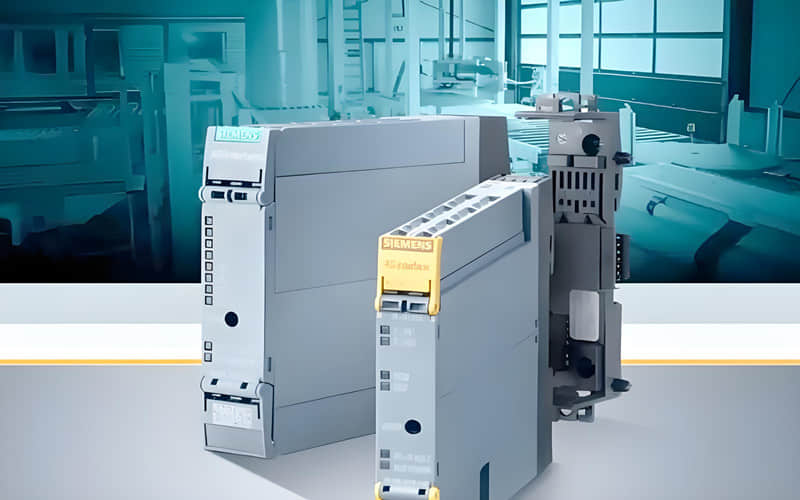
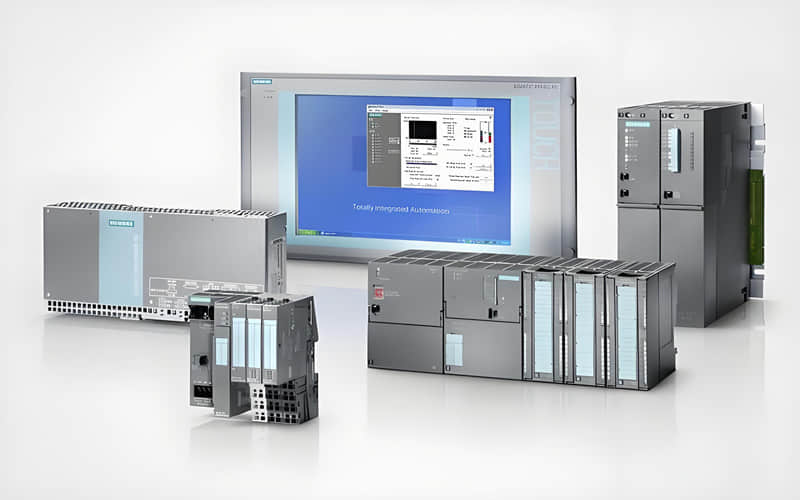
A standard industrial PLC enclosure integrates several modular hardware components that ensure stable, real-time data processing and signal conversion:
Central Processing Unit (CPU): The core computing engine that executes control algorithms, manages system memory, and coordinates network communication.
Input/Output (I/O) Modules: The physical interface translating field signals. Digital modules handle binary (ON/OFF) states, while analog modules process continuous signals such as 4-20mA sensor feeds or 0-10V inputs.
Power Supply Unit (PSU): Converts AC mains power into stable, regulated DC voltages (typically 24VDC) required for internal logic circuitry and field instrumentation.
Communication Interfaces: Enable high-speed data exchange via industrial networking protocols (e.g., Ethernet, RS-485).
Human-Machine Interface (HMI): Allows operators and maintenance engineers to monitor runtime variables, adjust operational parameters, and view active fault alarms in real time.
3. Standardization and Programming Languages (IEC 61131-3)
Modern PLC development environments adhere strictly to the IEC 61131-3 international standard, which defines five primary programming languages to accommodate engineers with diverse software and electrical backgrounds:
Ladder Diagram (LD): A graphical language resembling traditional electrical relay schematics; highly intuitive for electricians and maintenance personnel.
Function Block Diagram (FBD): Uses interconnected graphical blocks for signal processing, continuous control loops, and complex mathematical functions.
Structured Text (ST): A high-level, text-based language similar to Pascal or C, ideal for complex data manipulation, array handling, and advanced mathematical computations.
Sequential Function Chart (SFC): Suited for step-by-step sequential operations, state machines, and batch processing.
Instruction List (IL): A legacy, low-level assembly-style language largely deprecated in modern engineering platforms.
4. Major Global PLC Manufacturers and Ecosystems
Selecting the appropriate hardware ecosystem depends on project scale, software familiarity, and regional industry standards. The market is dominated by several key manufacturers:
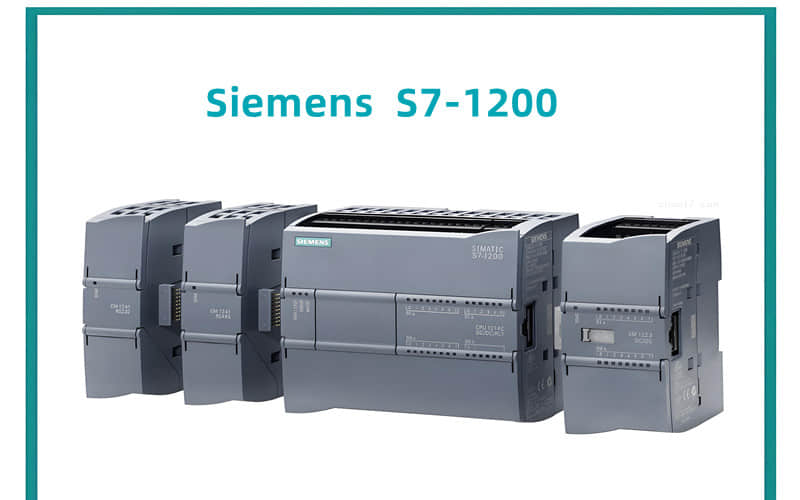
Siemens (SIMATIC S7-1200 / S7-1500): Renowned for high-efficiency processing, advanced TIA Portal software integration, and robust support for modern communication standards in process automation.
Rockwell Automation / Allen-Bradley (ControlLogix / CompactLogix): Widely adopted in North American ecosystems, offering exceptional durability, scalable architecture, and Studio 5000 integration.
Schneider Electric / Modicon: Pioneers of modularity and open communication standards like Modbus, providing strong processing power and flexibility.
Mitsubishi Electric & Omron: Dominant in Asian and global machinery manufacturing, offering high-speed processing, compact micro-PLCs, and specialized motion control modules.
5. Practical Guidelines for Selecting the Right PLC
When evaluating controllers for a new industrial application, system integrators and procurement specialists should weigh several critical parameters:
I/O Capacity and Expansion: Ensure the base unit or modular backplane accommodates current signal requirements with a 20% to 30% margin for future expansion.
Processing Speed and Scan Time: High-speed motion control or rapid sorting applications require high-performance CPUs with minimal execution latency.
Communication Protocols: Verify native support for plant-wide networks, such as PROFINET, EtherNet/IP, or Modbus TCP.
Ecosystem and Software Costs: Factor in licensing fees, engineering man-hours required for programming, and long-term parts availability to optimize total cost of ownership (TCO).
For more articles you may be interested in, please refer to the following:
Critical Considerations for the Selection of PLC
How to Build the Right PLC Control Cabinet?