Published by: Xiamen Zhenyoumei Display Products Co., Ltd.
Author: Technical Engineering Team
Last Updated: July 2026
Table of Contents
Overview of Siemens PLC in Industrial Automation
Introduction and Selection of Siemens PLCs Five Major Series
For Siemens 1200 PLCs, How to Choose Suitable Models?
Exploring the Benefits of Siemens PLC in Modern Automation
Critical Considerations for the Selection of PLC
What is a PLC? Programmable Logic Controller
How to Learn to Become a PLC Programmer – Tips
How to Build the Right PLC Control Cabinet?
What is a PLC and How Does a PLC Work?
Sourcing Authentic Siemens PLC Modules
1. Overview of Siemens PLC in Industrial Automation
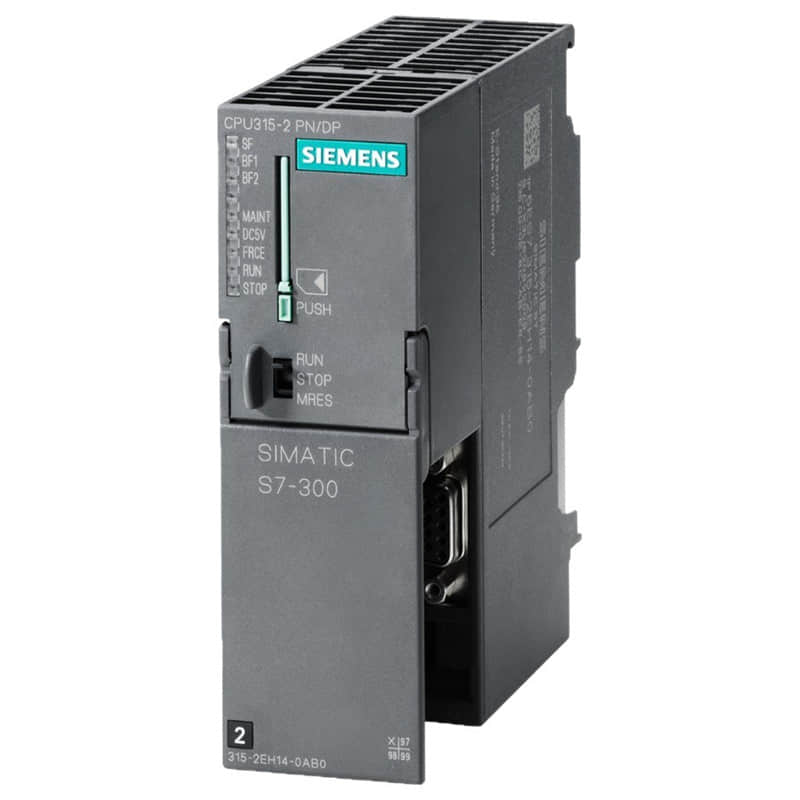
Programmable Logic Controllers (PLCs) serve as the digital nervous system of modern industrial manufacturing, energy grids, and complex machinery. Among global automation giants, Siemens SIMATIC S7 series stands out as an industry benchmark for reliability, modular scalability, and robust diagnostic capabilities.
As a specialized global supplier of industrial automation components, our engineering team works daily with international procurement engineers who demand zero-tolerance downtime. This comprehensive guide aggregates core technical documentation, selection criteria, and practical deployment strategies for Siemens PLC architecture.
2. Introduction and Selection of Siemens PLCs Five Major Series
Selecting the correct controller architecture dictates the long-term efficiency and upgrade path of any automation project. Siemens structures its SIMATIC portfolio into distinct tiers tailored to specific scale requirements:
SIMATIC S7-1200: Compact, modular controllers designed for micro-to-medium automation tasks with integrated PROFINET IO controllers.
SIMATIC S7-1500: High-end modular controllers engineered for maximum performance, multi-axis motion control, and plant-wide integration.
SIMATIC S7-300 / S7-400: Proven legacy powerhouses widely deployed in heavy process industries and large-scale manufacturing lines.
SIMATIC S7-200 SMART: Cost-optimized brick-style controllers specifically engineered for standalone machine builders in emerging markets.
For a deep dive into matching these hardware tiers with specific application demands, review our detailed breakdown on Introduction and Selection of Siemens PLCs Five Major Series.
3. For Siemens 1200 PLCs, How to Choose Suitable Models?
The SIMATIC S7-1200 range offers multiple CPU variations (such as CPU 1211C, 1212C, 1214C, 1215C, and 1217C) differing in onboard I/O counts, memory expansion limits, and communication ports. Choosing the optimal unit requires balancing current operational requirements against future field device expansions.
Key configuration steps and sizing logic are outlined in our practical manual: For Siemens 1200 PLCs, How to Choose Suitable Models?.
4. Exploring the Benefits of Siemens PLC in Modern Automation
Modern industrial ecosystems demand high-speed deterministic networking, integrated safety (Safety Integrated), and seamless cloud connectivity via OPC UA and MQTT. Siemens SIMATIC controllers integrate these features directly into the TIA Portal engineering framework.
To understand how advanced diagnostic buffers and modular signal boards reduce Mean Time to Repair (MTTR), read our engineering analysis on Exploring the Benefits of Siemens PLC in Modern Automation.
5. Critical Considerations for the Selection of PLC
Specifying an industrial controller goes beyond counting digital inputs and outputs. Engineers must evaluate environmental factors, processing cycle times, communication protocols, and compliance certifications.
Environmental Resilience: Operating temperature ranges, vibration resistance, and conformal coating requirements for harsh factory floors.
Scan Time and Determinism: Ensuring high-speed logic execution for motion-critical applications.
Network Topology: Supporting PROFINET, PROFIBUS, Modbus TCP, and industrial Ethernet security standards.
For a comprehensive evaluation framework, consult Critical Considerations for the Selection of PLC.
6. What is a PLC? Programmable Logic Controller
For junior engineers and procurement specialists entering industrial automation, understanding the foundational architecture of a PLC is essential. A standard PLC consists of a Central Processing Unit (CPU), memory units, power supply modules, and input/output (I/O) interfaces that interface directly with sensors, actuators, and human-machine interfaces (HMIs).
Explore the core operational definitions in What is a PLC? Programmable Logic Controller.
7. How to Learn to Become a PLC Programmer – Tips
Mastering PLC programming—whether via LAD (Ladder Logic), FBD (Function Block Diagram), or SCL (Structured Control Language) within Siemens TIA Portal—requires a structured blend of theoretical knowledge and hands-on simulation.
Our senior automation engineers share practical learning roadmaps, debugging habits, and simulation techniques in How to Learn to Become a PLC Programmer – Tips.
8. How to Build the Right PLC Control Cabinet?
Physical cabinet layout directly influences signal integrity, thermal dissipation, and electrical noise immunity. Proper segregation of 24VDC control wiring from 220VAC/380VAC power lines, grounding bar implementation, and DIN-rail arrangement prevent electromagnetic interference (EMI).
Step-by-step assembly guidelines and layout schematics are detailed in How to Build the Right PLC Control Cabinet?.
9. What is a PLC and How Does a PLC Work?
A PLC operates on a continuous scanning cycle consisting of three primary phases:
Input Scan: Reading the physical state of all input terminals and storing them in memory table buffers.
Program Execution: Processing user logic instructions sequentially from top to bottom based on current input table states.
Output Scan: Updating physical output latches to drive solenoids, motor starters, and indicator lights.
A deeper theoretical explanation is provided in What is a PLC and How Does a PLC Work?.
10. Sourcing Authentic Siemens PLC Modules
Deploying counterfeit or refurbished automation hardware introduces severe risks of catastrophic plant failure. At Xiamen Zhenyoumei Display Products Co., Ltd., we guarantee 100% brand-new, factory-sealed Siemens automation components, backed by strict traceability and technical documentation support.
Request a Quotation: Need specific CPU modules, communication processors, or analog signal cards? Contact our engineering sales team directly via our Contact Us page.
Related Technical Support: For broader industrial instrumentation and combustion safety equipment guidance, explore our main Blog Portal.
Explore More Formats & Join the Discussion:
If you prefer to review this information in alternative formats or want to connect with our engineering community, you can access our resources across multiple platforms:
SlideShare: View and download the structured presentation summary on our Siemens PLC Systems: Complete Technical & Selection Guide
Scribd: Read and share the complete technical document on our Siemens PLC Systems: Selection, Programming & Technical Manual
LinkedIn: Join the technical conversation, share your industrial automation experiences, and follow our updates on Ultimate Siemens PLC Technical & Selection Guide for Engineers