1. Definition of Programmable Logic Controller
A Programmable Logic Controller —often called a PLC system—is a ruggedized industrial computer used for industrial automation. It monitors input devices, processes logic, and controls output devices in real time. A PLC controller is like the brain of an automation system. It runs control operations automatically and accurately.
A PLC in electrical and industrial applications replaces complex relay-based systems with flexible and reliable electronic control. PLCs connect with the external environment through input and output devices. Input devices such as sensors, switches, and transmitters send data to the PLC. Output devices, like solenoids, valves, and motors, execute commands based on the PLC’s programmed logic.
The PLC system includes:
The CPU (Central Processing Unit): The processor that executes instructions.
l Input/Output (I/O) Modules: Interface with analog input and digital signals.
l Power Supply: Provides stable energy to all PLC components.
l Communication Interfaces: Enable data exchange using various communication protocols.
l Human Machine Interface (HMI): Allows operators to monitor and adjust operations.
A PLC panel integrates these components into one enclosure, ensuring safety, efficient wiring, and ease of maintenance.
Unlike general-purpose computers, engineers design programmable logic controllers (PLCs) for harsh industrial environments. They are rugged computers that can handle heat, vibration, and electrical noise. This makes them perfect for industrial uses like assembly lines, robotic systems, and energy management.
PLC programming defines the controller’s behavior. Engineers use PLC programming languages to create automation logic. Some of these languages are:
- Ladder Diagram (LD)
- Function Block Diagram (FBD)
- Structured Text (ST). These languages form part of the IEC 61131-3 standard for industrial programming.
A PLC is a simple, rugged industrial computer. It offers reliable, modular, and programmable control for complex processes in manufacturing and other areas.
2. History of PLCs
2.1 Introduction to Modicon
Bedford Associates created the first Programmable Logic Controller (PLC) in 1968. They introduced the Modicon 084, the world’s first PLC. The name “Modicon” comes from “Modular Digital Controller.” This name shows the idea of modularity, which is essential for modern modular PLC systems.
Modicon was the first to combine communication protocols and modular parts. This created a base for industrial computers. These computers can control many automation systems using input and output devices.
In the 1980s, Modicon introduced Modbus. This was one of the first industrial communication standards. It allowed PLCs to connect easily with other devices like HMIs and SCADA systems. Today, Schneider Electric continues to produce programmable logic controllers (PLCs) under the Modicon brand, offering a wide range of automation solutions for industrial applications.
Some Modicon Parts, for your reference only:
Schneider ZCKE05 Limit Switch Actuator Head
2.2 History of Allen-Bradley
Allen-Bradley, now part of Rockwell Automation, entered the PLC market in 1970 with the Bulletin 1774 PLC. This marked the birth of the term “Programmable Logic Controller.”
Later innovations, like the Data Highway network, brought new communication methods. These methods let industrial computers and automation systems talk to each other on the factory floor. Modern Allen-Bradley PLCs, such as the CompactLogix and ControlLogix series, support HMIs. They also use Ethernet/IP and complex function block diagrams for process control.
Both Modicon and Allen-Bradley remain pioneers, continually expanding their product lines to meet evolving automation needs.
3. Architecture of Programmable Logic Controller (PLC)
Engineers structure a Programmable Logic Controller (PLC) like a miniature industrial computer specifically for automation. Its design ensures precise, consistent control across a wide range of industries.
3.1 Types of PLC Architecture
l Fixed PLC Architecture: Compact units integrating CPU, I/O, and power supply.
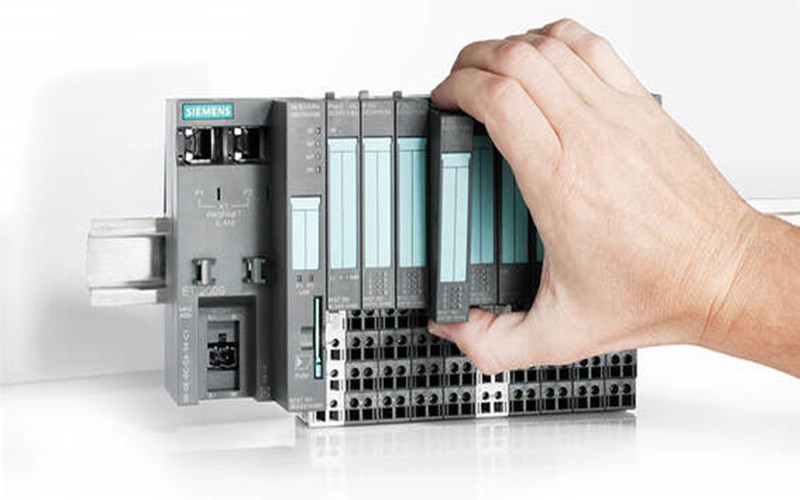
l Modular PLC Architecture: Systems built from individual, interchangeable modules—CPU, I/O, power supply, and communication—offering superior flexibility and scalability.
3.2 Main Components of a PLC
The CPU (Central Processing Unit): Executes the control program and coordinates operations.
l Memory: Stores system firmware, user programs, and real-time data.
l Input and Output Modules: Connect sensors (input) and actuators (output) for real-world signal processing.
l Power Supply: Ensures stable operation across voltage variations.
l Communication Interface: Connects the PLC to human-machine interfaces (HMIs), industrial networks, and SCADA systems. It uses standard communication protocols like Modbus, EtherNet/IP, and Profibus.
3.3 PLC Programming Languages
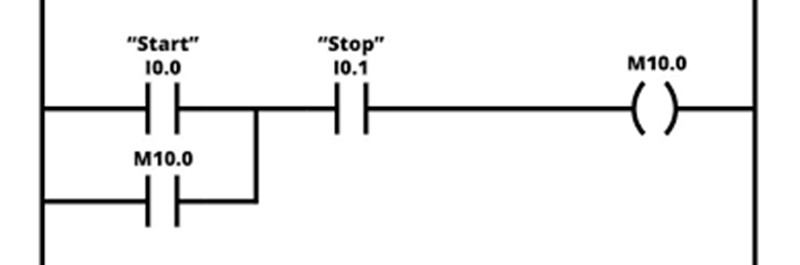
PLC programming enables users to define automation logic using standardized languages:
l Ladder Diagram (LD) – resembles relay logic.
l Function Block Diagram (FBD) – represents functions graphically.
Structured Text (ST) – a high-level text-based language.
l Sequential Function Chart (SFC) – manages complex, multi-step processes.
l Instruction List (IL) – a now-deprecated assembly-like language.
l These PLC programming languages provide intuitive methods to design, simulate, and implement control algorithms for industrial applications.
4. Communication of PLC with Other Devices
Modern programmable logic controllers (PLCs) communicate extensively within automation systems. They use diverse communication protocols to interact with input and output devices, industrial computers, and human-machine interfaces.
4.1 Communication Interfaces
Serial (RS-232 / RS-485): Traditional wired communication for sensors and controllers.
l Ethernet: High-speed data transfer over industrial networks.
l Fieldbus (Profibus, Modbus, CANopen): Reliable multi-device connectivity.
l Wireless (Wi-Fi, Bluetooth, Zigbee): Enables remote monitoring and control.
4.2 Communication Protocols
l Modbus RTU / TCP/IP – widely used for industrial connectivity.
l Profibus-DP / PA – high-speed communication for distributed systems.
l EtherNet/IP – supports both control and information exchange.
l HART and OPC – allow integration between analog systems and digital control.
These communication protocols ensure that PLCs can synchronize with devices across complex automation systems.
5. Applications of PLCs in Industry
5.1 Manufacturing
PLCs are the backbone of assembly lines and robotic control systems. They ensure synchronized motion, safety interlocking, and real-time response.
5.2 Chemical and Food Industries
They maintain precise control of temperature, flow, and chemical reactions, improving efficiency and quality assurance.
5.3 Building and Energy Systems
Used in smart buildings, lighting control, and power supply management, PLCs optimize energy consumption and environmental comfort.
5.4 Logistics and Transportation
In intelligent logistics, PLCs control conveyors, stackers, and sorting systems. In transportation, they regulate traffic lights and manage automation for public systems.
5.5 Medical and Environmental Control
PLCs support industrial applications like surgical automation, medical equipment management, and environmental monitoring systems.
In all cases, PLCs act as industrial computers providing precise control and fault tolerance.
6. Modular Programmable Logic Controller (Modular PLC) — Future Development Direction
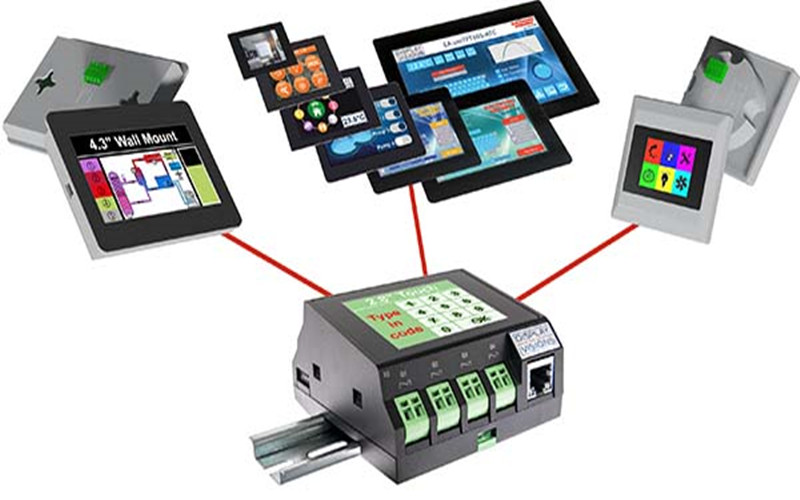
A Modular PLC is a flexible system. Its parts, like the CPU, power supply, and I/O, are separate modules. This design provides superior flexibility, maintainability, and expandability.
Working Principle of a Modular PLC
A. Input Sampling: Receives and stores data from field input devices.
B. Program Execution: Processes logic instructions using PLC programming languages, such as function block diagrams.
C. Output Refresh: Updates signals to actuators and external output devices.
This scan cycle repeats continuously, allowing real-time, precise control of operations.
Advantages of Modular PLCs
D. High Performance: Suitable for complex automation systems.
E. Flexibility: Easily adapt modules for varied industrial applications.
F. Easy Maintenance: Replace modules without system downtime.
G. Networking and Intelligence: Support IoT, edge computing, and smart communication.
Modern modular PLCs use advanced communication methods. They support remote diagnostics and connect easily with human-machine interfaces and industrial computers. This makes them essential for modern industrial automation.
7. Further Reading
Exploring the Benefits of Siemens PLC in Modern Automation
Top 5 Features of the Allen-Bradley CompactLogix PLC for Efficient Automation