Sourcing industrial components online has never looked easier. With a few clicks, procurement teams can find marketplace listings for almost any PLC module, flame safeguard, or transmitter. However, as any seasoned plant engineer or maintenance manager will tell you, buying from a generic box-mover without technical backing is a gamble that almost always ends in costly downtime.
With years of hands-on experience navigating the complexities of global B2B industrial automation supply—specializing in high-stakes Siemens and Honeywell process controls—we frequently find in our Honeywell orders bound for Europe and the Middle East that the true value of industrial procurement goes far beyond unit prices. It lies in technical support, cross-reference accuracy, and application guidance that ensure parts work on the first try.
1. The Hidden Cost of "Cheap" Industrial Parts
When a production line halts due to a failed controller or burner management component, the pressure to buy the cheapest, fastest-delivered replacement is immense. However, ordering purely by part number without verifying hardware revisions, firmware compatibility, or operational conditions often introduces secondary failures.
If a discounted part arrives uncalibrated, lacks proper technical documentation, or turns out to be a superseded revision, the resulting downtime will far exceed the wait for a correctly verified component. In industrial automation, downtime costs thousands of dollars per minute; sacrificing technical risk for a lower upfront unit price is a false economy.
2. High-Stakes Automation Sourcing and Technical Support
In global industrial control procurement, orders are rarely simple transactions. As supply chains lengthen, technical support capabilities often determine whether a production line runs smoothly.
Avoiding System Integration Version Traps
Industrial lines span multi-year lifecycles, and minor hardware revisions or firmware discrepancies can trigger bottom-layer communication failures. Proper procurement is a technical craft: identically appearing replacement parts from different production batches can easily cause communication errors upon site integration. Without a solid engineering background, procurement relies purely on paper parameters, leading to mismatched components that cause cascading failures at startup.
For instance, when managing combustion systems, ignoring component-level compatibility can lead to severe operational failures. To dive deeper into how precise hardware matching impacts safety, read our guide on Honeywell Flame Safeguard: Why Choosing the Right Amplifier Matters.
Eliminating Lead Times and Communication Bottlenecks
When procurement lacks independent technical judgment, any material anomaly must be escalated back to R&D or plant engineers. This creates a double internal bottleneck: overworked R&D teams are forced into supplier disputes, while procurement cannot counter supplier information gaps.
Exposing Inflated Process Margins: When suppliers inflate pricing citing complex processes or special engineering methods, technically capable procurement can counter with exact fabrication logic.
Compressing Inflated Delivery Schedules: Experienced professionals can compress padded manufacturing lead times down to realistic machining hours, removing unnecessary safety buffers.
Solving Obsolete Hardware Replacement Challenges
Sourcing legacy equipment and managing obsolete Siemens PLC parts replacement requires deep foundational technical DNA. Without dedicated supplier engineering roles, enterprises cannot bridge the gap between discontinued factory requirements and viable substitutes, resulting in expensive machinery retrofits.
3. Field Case Studies: Real-World Application and Strategy
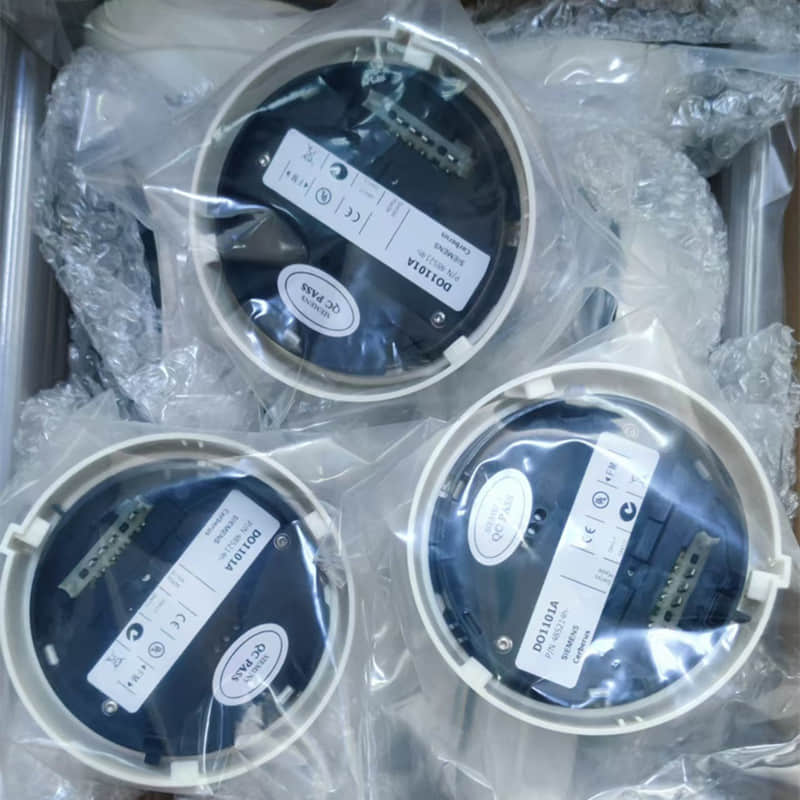
Case 1: Siemens Flame Detector Base Replacement (DB1101A / DB1101A-EX)
Scenario: In hazardous oil, chemical, and metallurgical environments, replacing flame detector bases in explosion-proof monitoring setups leaves no room for error. Equipment compliance and safety are paramount.
Technical Challenge: Suffixes on Siemens product lines (such as standard versus -EX explosion-proof variants) are easily confused. Selecting the wrong explosion-proof rating due to shortcuts risks plant downtime and catastrophic safety violations.
Support Value: Professional support focuses on front-end precision validation. Verifying exact part numbers (distinguishing DB1101A-EX from standard DB1101A) and installation compatibility completely eliminates trial-and-error downtime in high-risk environments.
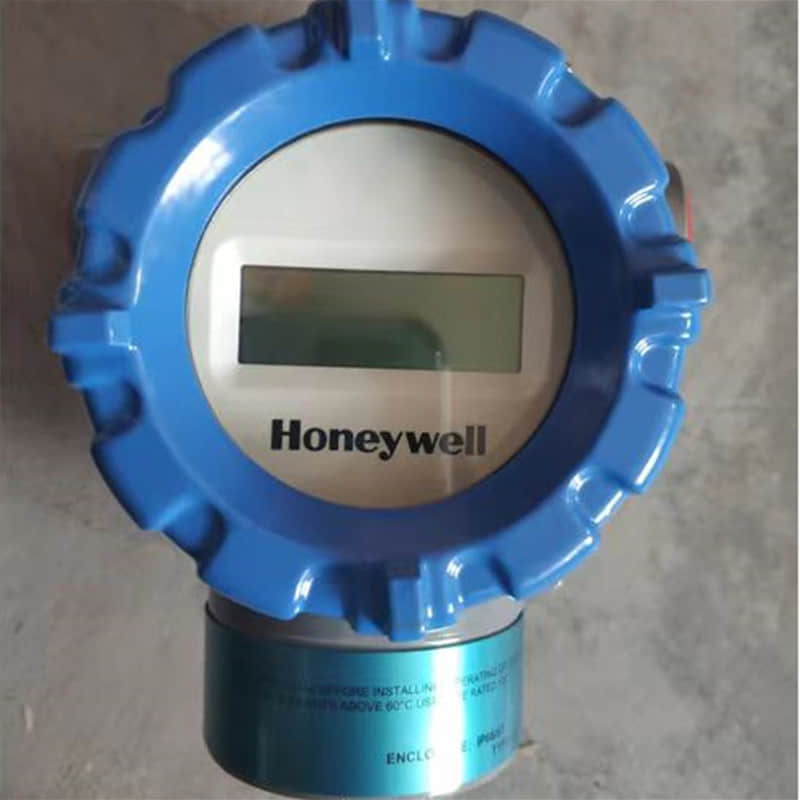
Case 2: Honeywell Heavy Combustion Controller Sourcing (8537101190)
Scenario: Heavy industries like steel, petrochemicals, and glass manufacturing rely on commercial burner management systems where controller swaps dictate thermal efficiency and safety.
Technical Challenge: Honeywell combustion control troubleshooting centers on three critical parameters: operational voltage matching, flame signal amplifier type matching, and safety lockout sequence matching. Cross-batch controllers possess underlying hardware variations; improper selection can prevent fuel shutoff during failures, triggering safety disasters.
Support Value: Professional technical support delivers dual value:
Technical Execution: Providing detailed pinout definitions and wiring schematics to ensure field engineers complete wiring accurately within tight windows, preventing hardware burnouts from miswiring.
Customs Compliance: Pinpointing tariff code 8537101190 (applicable to electrical control panels and boards under 1000V) prevents port delays, penalties, and extra duties, smoothing the final leg of cross-border industrial equipment spare parts procurement.
Beyond correct voltage and pinout matching, field engineers often face complex diagnostic codes during initial commissioning. For step-by-step instructions on resolving these issues, refer to Honeywell Burner Controls: How to Read the Troubeshooting Manual.
4. Evaluation Guide for Technical Spare Parts Suppliers
Procurement teams evaluating partners for Siemens industrial automation parts supplier selection should focus on three critical dimensions:
1. Deep Application Knowledge Beyond Catalogs
Top-tier partners possess a deep grasp of process controls, electrical hardware, and fire safety systems.
Engineering-Backed Teams: Staff must understand actual field applications, delivering quality assurance and rapid engineering support for valves and controllers.
Industry Leadership: A proven track record of serving tier-one OEM manufacturers demonstrates genuine domain expertise.
Proactive Risk Mitigation: True suppliers intercept risks before clients notice them. Holding prices during market spikes and stepping in during post-sale emergencies builds irreplaceable trust.
2. Full-Chain Traceability and Quality Control
Risk management for technical components requires systematic supply chain control, not just end-point inspection:
Rigorous Certifications: Partners must maintain ISO 9001, ISO 14001, and ISO 45001 management accreditations.
Lot Traceability: Critical spares require detailed batch documentation, manufacturing dates, and hardware revisions.
In-House Processing: Suppliers should control core manufacturing and quality inspections natively.
Compliance Screening: Validating LA, CE, and RoHS certifications instantly filters out unreliable sourcing channels within seconds.
3. Full Lifecycle Support and Post-Sale Guidance
Installation Guidance: Detailed wiring diagrams, pin definitions, and configurations ensure seamless integration for transformers, gas valves, and detectors.
Fault Diagnosis: Assisting maintenance crews in resolving error codes and troubleshooting root causes swiftly.
Quantified Emergency Safeguards: Embedding dedicated account managers and stock guarantees into contracts, alongside multi-facility setups to mitigate regional and tariff risks.
Small-Batch Trial Orders: Validating a new vendor's response time and service attitude through low-risk initial orders.
5. Conclusion and Procurement Checklist
Summary of Procurement Value
Sourcing items through a trusted Honeywell control components sourcing channel or technical support for automation parts framework transcends low-bid logic. Centralized global procurement lowers structural costs while stabilizing supply chains. Choosing technically backed vendors guarantees uptime, minimizes total cost of ownership (TCO), and shields facilities from compliance and safety hazards via precise part matching and accurate tariff coding (8537101190).
Supplier Evaluation Checklist
Evaluation Dimension | Key Inspection Item | Specific Description |
Technical Capability | Engineering-backed teams | Staff must understand process controls and electrical hardware rather than just browsing catalogs |
Quality Certifications | ISO 9001, ISO 14001, ISO 45001 | Complete management system certifications form the baseline for process traceability |
Traceability | Batch docs, manufacturing dates, hardware versions | Critical spares require detailed certificates of analysis and revision tracking |
Process Control | In-house core manufacturing capabilities | Owned workshop processes ensure controllable quality standards |
After-Sales Support | Installation guides, diagnostics, emergency response | Vendors must assist maintenance teams with setup and error code isolation |
Compliance Capability | LA, CE, RoHS, customs tariff classification | Ensures adherence to local codes, preventing customs clearance delays |
Supply Chain Resilience | Multi-site footprint, emergency stock capacity | Multi-facility layouts disperse regional, tariff, and production disruptions |
Call to Action (CTA)
Share your equipment nameplate or RFQ details to receive professional cross-referencing and reliable global delivery support. Our engineering team provides:
Precise alternative part matching based on equipment nameplates
Verification of part numbers, explosion-proof ratings, and voltage specs
Customs tariff classification guidance for smooth clearance
On-site installation guidance and diagnostic troubleshooting assistance
Explore More Formats & Join the Discussion:
If you prefer to review this information in alternative formats or want to connect with our engineering community, you can access our resources across multiple platforms:
SlideShare: View and download the structured presentation summary on Technical Sourcing & Quality Assurance Guide for Industrial Automation Components
Scribd: Read and share the complete technical document on our Siemens & Honeywell Industrial Automation Sourcing Guide
LinkedIn: Join the technical conversation, share your industrial automation experiences, and follow our updates on Why Technical Support Matters for Siemens & Honeywell Sourcing