1. Introduction: The Core Brain of Industrial Automation
What is a Programmable Logic Controller (PLC)?
A Programmable Logic Controller (PLC) is a ruggedized industrial computer designed to operate reliably in harsh manufacturing environments characterized by extreme temperatures, vibration, humidity, and electrical noise. Unlike standard commercial computers, a PLC monitors field input devices (such as sensors, limit switches, and transmitters), processes user-defined automation logic in real time, and controls output devices (such as solenoids, valves, and motor starters).
In modern industrial automation, process controls, and heavy electrical hardware systems, PLCs have entirely replaced traditional, inflexible relay-based logic panels. They form the foundational "brain" of automated assembly lines, robotic cells, and critical process control loops.
Key Components of a PLC System
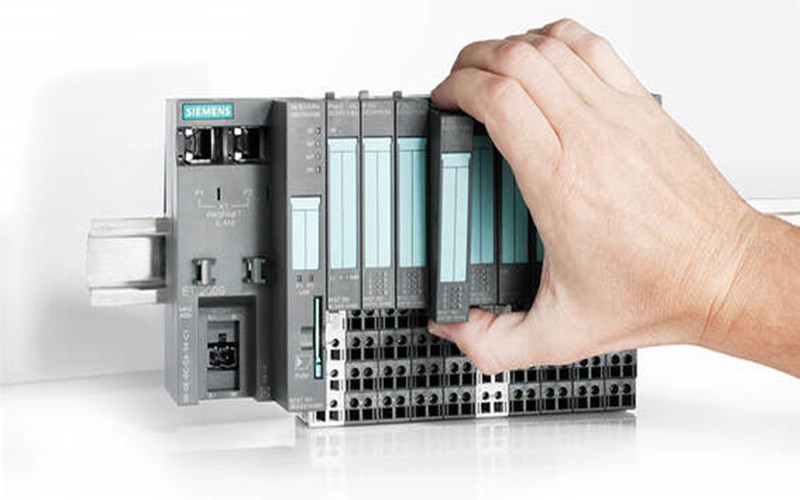
A standard industrial PLC enclosure integrates several modular hardware components:
Central Processing Unit (CPU): Executes control algorithms, manages memory, and coordinates system communication.
Input/Output (I/O) Modules: Interface with digital (ON/OFF) and analog (4-20mA, 0-10V) field signals.
Power Supply Unit (PSU): Converts AC mains power into stable, regulated DC voltages (typically 24VDC) for internal logic and field devices.
Communication Interfaces: Enable high-speed data exchange via industrial protocols.
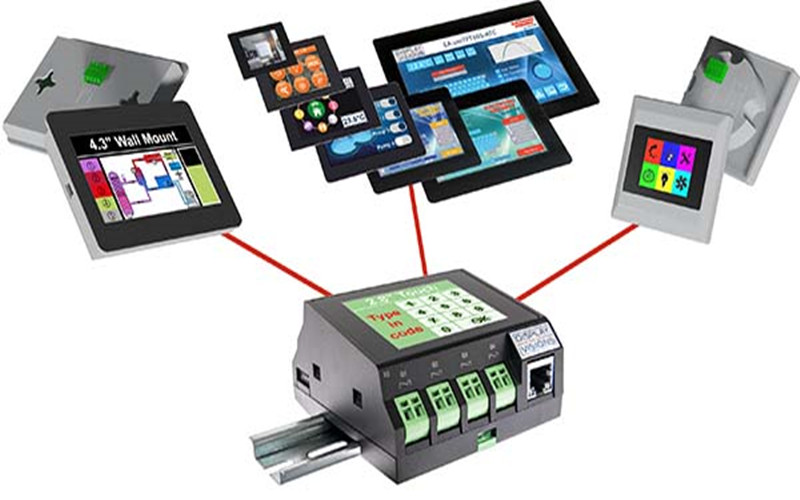
Human-Machine Interface (HMI): Allows operators to monitor runtime variables, adjust parameters, and view active fault alarms.
2. History and Evolution of Industrial PLCs
Understanding the origins of programmable controllers helps engineers appreciate modern modular architecture.
Modicon and the Birth of Modularity
In 1968, Bedford Associates developed the world's first PLC, named the Modicon 084 (derived from "Modular Digital Controller"). This innovation introduced the concept of modularity, allowing plants to scale automation without rewiring entire relay racks. In the 1980s, Modicon introduced Modbus, one of the earliest open industrial communication standards, enabling seamless integration between PLCs, HMIs, and SCADA systems. Today, Schneider Electric continues this legacy under the Modicon brand.
Allen-Bradley and Industrial Networks
Allen-Bradley (now part of Rockwell Automation) entered the market in 1970 with the Bulletin 1774 PLC, officially coining the term "Programmable Logic Controller." Subsequent network innovations like the Data Highway allowed multiple controllers to communicate across the factory floor, paving the way for modern platforms like ControlLogix and CompactLogix.
Some Modicon Parts, for your reference only:
Schneider ZCKE05 Limit Switch Actuator Head
3. Architecture of Programmable Logic Controllers
Fixed vs. Modular PLC Architecture
Fixed (Compact) PLC: Integrates the CPU, power supply, and a fixed number of I/O points into a single, space-saving enclosure. Ideal for small-scale, cost-sensitive standalone machines.
Modular PLC: Built on a rack or backplane using interchangeable, standalone modules (CPU, power supply, specialized communication, and I/O cards). This architecture offers superior scalability, easy maintenance, and high channel density for complex plant-wide applications.
Standardized PLC Programming Languages (IEC 61131-3)
Engineers configure PLC behavior using standardized programming languages defined under IEC 61131-3:
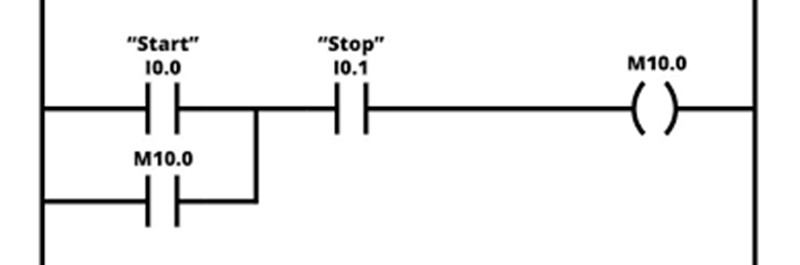
Ladder Diagram (LD): Graphical language resembling traditional electrical relay schematics; highly intuitive for electricians.
Function Block Diagram (FBD): Uses interconnected graphical blocks for signal processing and complex control loops.
Structured Text (ST): A high-level, text-based language similar to Pascal, ideal for complex mathematical computations and data handling.
Sequential Function Chart (SFC): Suited for step-by-step sequential or batch processes.
4. How Does a PLC Work? The Real-Time Scan Cycle
The fundamental operational backbone of any PLC is its continuous Scan Cycle. Understanding this cycle is critical for troubleshooting response time issues or communication lags in high-speed manufacturing lines. The scan cycle consists of three core sequential phases:
Input Sampling (Read Inputs): The CPU scans all physical input terminals, reads the current ON/OFF or analog values from field sensors, and copies these states into an internal memory table (the input image table).
Program Execution (Process Logic): The CPU executes the user program instruction by instruction, evaluating ladder rungs or structured text using the data stored in the input image table. The resulting output states are written to an output image table.
Output Refresh (Write Outputs): Finally, the PLC updates the physical output terminals based on the output image table, energizing or de-energizing actuators, relays, valves, and motor starters in the field.
This entire cycle executes in milliseconds, ensuring real-time fault tolerance and precision control.
5. Industrial Communication Protocols and Interfaces
Modern automation systems require seamless connectivity across diverse hardware vendors. PLCs utilize robust communication interfaces and protocols:
Physical Interfaces: Serial (RS-232 / RS-485 for legacy field instruments), Industrial Ethernet (RJ45 / Fiber optics for high-speed plant networks), and Wireless (Wi-Fi, Zigbee for remote diagnostics).
Key Protocols:
Modbus RTU / TCP: Universally deployed for simple device polling and data logging.
Profibus-DP / PROFINET: High-speed fieldbus and industrial Ethernet standards heavily utilized in European machinery.
EtherNet/IP: Widely adopted in North American automation ecosystems for both control and IT data convergence.
6. Real-World Industrial Applications
Discrete Manufacturing & Automotive: Synchronizing high-speed assembly lines, robotic welding cells, and safety interlocks.
Process Industries (Chemical & Food/Beverage): Managing PID control loops for precise temperature, pressure, flow rate, and chemical mixing.
Energy and Power Management: Monitoring smart grid distribution, substation automation, and HVAC energy efficiency in commercial buildings.
Logistics & Material Handling: Operating automated sortation systems, high-speed conveyors, and automated storage and retrieval systems (AS/RS).
7. Practical Engineering Troubleshooting: Why PLCs Fail in the Field
Based on field integration experience, sudden production halts are rarely caused by CPU failure. Instead, maintenance engineers typically isolate issues to three common areas:
I/O Module Failures: Often caused by inductive voltage spikes from unsuppressed relay coils or solenoids. Solution: Always verify flyback diodes or RC snubbers on inductive DC/AC loads.
Communication Drops: Caused by electromagnetic interference (EMI) on unshielded communication cables or mismatched baud rates/IP addressing. Solution: Use grounded shielded twisted-pair cables (e.g., STP for Profibus/Modbus).
Power Supply Dips: Sagging 24VDC rails leading to erratic sensor readings or random CPU watchdog resets. Solution: Monitor power supply load margins and ensure proper grounding to earth.
8. Conclusion
The Programmable Logic Controller remains the undisputed backbone of modern industrial automation. Whether you are designing a compact modular assembly cell or retrofitting legacy process controls, understanding PLC architecture, scan cycles, and communication protocols ensures high system uptime, safety compliance, and operational efficiency.
Need assistance sourcing rare or obsolete automation hardware, PLC modules, or industrial control components? Contact our engineering supply team today for professional cross-reference and procurement support.
More reading:
Exploring the Benefits of Siemens PLC in Modern Automation
Top 5 Features of the Allen-Bradley CompactLogix PLC for Efficient Automation
For a complete overview of all Siemens automation solutions, check out our master guide: